

Created by Underwriters Laboratories (UL) under the “UL 1581 Reference Standard for Electrical Wires, Cables and Cords” standard, the VW-1 test helps manufacturers, engineers, and regulators verify that materials can rapidly self-extinguish when exposed to an ignition source. As electrical systems become more integrated into daily life, from household appliances to industrial machinery, understanding and complying with the VW-1 standard is essential to prevent catastrophic failures and save lives.
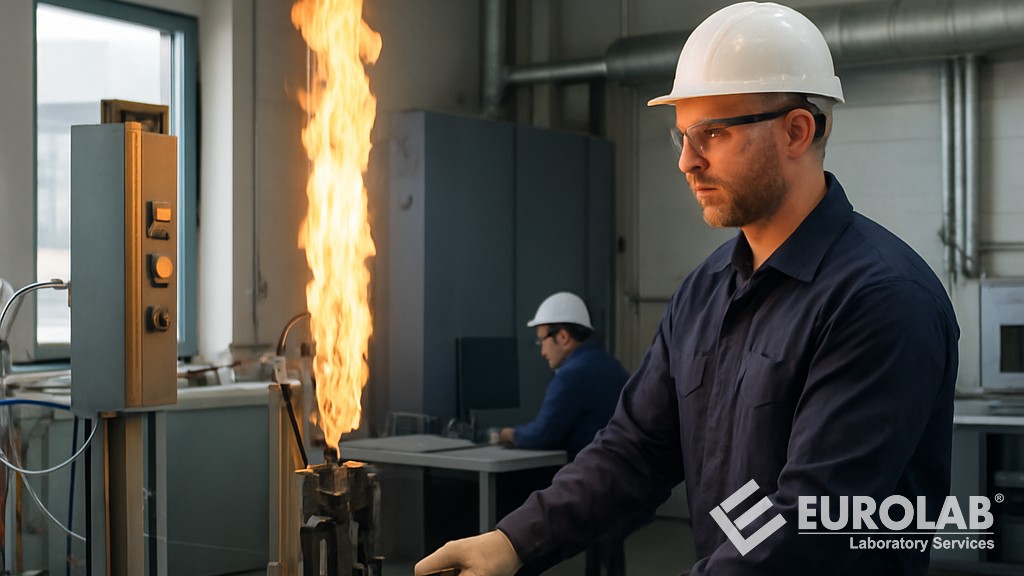
In the world of electrical engineering and safety standards, few tests are as fundamental as the VW-1 flame test. Developed to assess the flammability of wires and cables, this vertical wire flame test serves as a crucial screening tool to ensure electrical components do not contribute to the rapid spread of fire in real-world applications.
The VW-1 test provides a critical safety benchmark for wires and cables.
The VW-1 test emerged in the mid-20th century as part of broader efforts to standardize fire safety in the electrical industry. It was first detailed in the UL 1581 standard, developed to address modern challenges such as high-voltage applications and complex cable assemblies. Unlike broader material flammability tests such as the UL 94 standard, which rates plastics from HB to 5VA based on their burning rates and dripping behavior, the VW-1 flame test specifically targets finished wire and cable products, examining their behavior under direct flame exposure.
The basic purpose of the VW-1 test is simple: to identify and eliminate highly flammable wires that could ignite surrounding materials or spread flames in a fire. This method is often described as a screening test because it quickly weeds out low-quality products without the need for more elaborate setups like tray flame tests. This makes it a cost-effective yet reliable first line of defense in product certification. For example, wires used in fire alarm systems or building wiring must pass the VW-1 test to ensure they don't worsen emergencies and provide critical evacuation time.
The VW-1 test is performed in a controlled chamber to simulate controlled ignition conditions by mimicking a flame source similar to a Bunsen burner. The setup and procedure are rigorously defined to ensure reproducibility in laboratories worldwide. The steps of this test are as follows:
The entire process takes place in a draft-free chamber to prevent outside airflow from affecting the results. The equipment must conform to ASTM D5025 and ASTM D5027 standards for burner specifications, ensuring the flame provides consistent heat (approximately 950 degrees at the tip).
Passing the VW-1 test is not just about survival, but also about demonstrating controlled and minimal fire risk. The strict criteria are as follows:
Failure in any category disqualifies the wire. For example, if the insulation melts and drips a flammable substance that ignites the cotton, the sample is considered a failure even if it quickly extinguishes itself. These thresholds ensure that cables do not contribute to ignition or the spread of fire in collective installations.
The VW-1 rating is a cornerstone of electrical safety. Cables that pass this test are labeled “VW-1 compliant,” indicating to specifiers and end-users that the product meets UL’s stringent criteria. This is particularly vital in the following sectors:
For many years, our organization, with its competent and experienced staff, has been understanding the needs of its clients, providing the advanced testing services they require, and assisting in the establishment, implementation, and improvement of management systems. Within this framework, we also provide "VW-1 Flame Test - Vertical Flame" testing services to businesses.
To get an appointment, to get more detailed information or to request an evaluation, you can ask us to fill in our form and reach you.

