

The standard “BMW AA-0224 Cyclic corrosion test”, developed by BMW, a multinational vehicle manufacturer, describes a test method for determining the resistance of surface coatings and adhesive bonds to corrosive penetration (primarily for samples and components with steel as the base material).
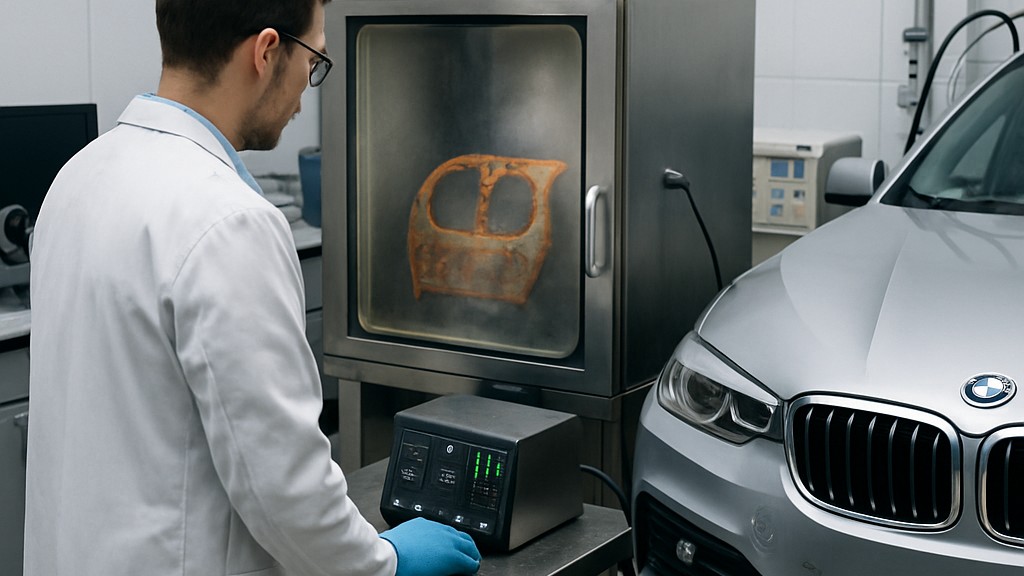
For each sample and component, only the surface areas exposed to the salt aerosol during the test (e.g. the upper surface of the sample relative to its location in the climatic chamber, i.e. the areas visible from a bird's eye view) are evaluated.
Bottoms and surface areas protected from salt exposure, as well as reservoirs, should be excluded from the evaluation. If abnormalities outside the specifications occur in unidentified exposed areas, the component is rated as non-conforming.
This standard applies to the assessment of edge corrosion, weld corrosion, degree of blistering, degree of rust, paint adhesion using the cross-cut test, surface changes and scratches in accordance with the BMW GS standard 90011.
In the high-stakes world of automotive manufacturing, where vehicles must withstand everything from coastal salt spray to harsh winter de-icing chemicals, durability isn't just a feature; it's a non-negotiable requirement. BMW's AA-0224 standard, a key testing standard that has become a cornerstone of the company's quality assurance processes, defines a cyclic corrosion test method. This standard ensures that surface coatings, adhesive bonds, and other critical components can withstand the relentless onslaught of environmental corrosion.
Unlike traditional static corrosion tests, such as salt spray (ASTM B117 standard), which bombard samples with a continuous saltwater mist, the BMW AA-0224 standard offers a dynamic, cyclical approach that reflects the unpredictable nature of real-world exposure. This standard arose from BMW's need to simulate the corrosion behavior of surface coatings and adhesive bonds in vehicles exposed to a variety of climates, from humid tropical regions to regions with salty roads.
The development of this standard was influenced by broader industry changes, including the rise of lightweight materials such as aluminum and high-strength steels in BMW's product line, as well as electric vehicles. The BMW AA-0224 standard has been updated to evaluate not only metal surfaces but also composite adhesives and environmentally friendly coatings, ensuring they do not undergo accelerated aging.
The BMW AA-0224 standard is essentially a meticulously orchestrated seven-day cyclical test designed to accelerate corrosion processes that could otherwise take years in the field. Conducted in special environmental chambers, the protocol progresses through four distinct phases, each targeting different degradation mechanisms:
This quadruplicate phase is repeated for seven days (168 hours total) and samples are examined for blistering, loss of adhesion or sub-film migration using tools such as cross-hatch adhesion tests (per BMW AA-P 177 standard).
A pass/fail decision based on visual and microscopic criteria ensures that components meet BMW's stringent thresholds (generally no more than 5 percent surface degradation).
In short, the BMW AA-0224 standard is deemed necessary to ensure that vehicles meet high durability and quality expectations in the face of real-world environmental challenges for the following critical reasons:
Our organization, with its competent and experienced team, has been understanding the needs of its customers for years, providing them with the advanced testing services they need, and assisting them in establishing, implementing, and improving management systems. In this context, we also provide testing services in accordance with the BMW AA-0224 Cyclic Corrosion Testing Standard.
To get an appointment, to get more detailed information or to request an evaluation, you can ask us to fill in our form and reach you.

