

The “Ford FLTM BO 131-03 Interior Odor Test” standard, developed by Ford Motor Company (Ford), describes a test method for evaluating odors emanating from materials, components, and parts used in vehicle passenger compartments. This standard aims to ensure that interior materials do not produce unpleasant, disturbing, or excessive odors that could negatively impact customer satisfaction.
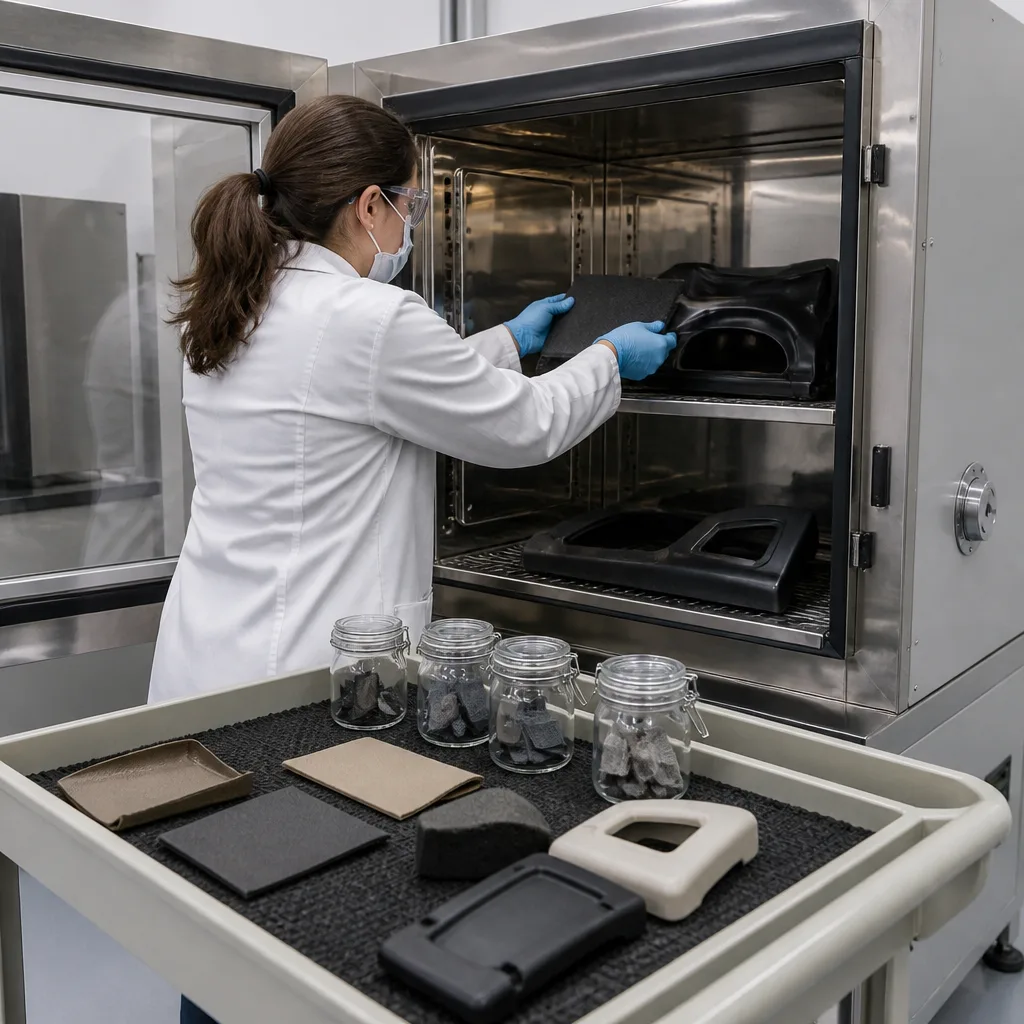
This method applies to interior trim materials, air duct systems, luggage compartment components, and any parts that may release volatile emissions into the vehicle cabin. Ford introduced this requirement because customer research showed that car buyers expect a clean, neutral, or characteristic new car smell rather than strong chemical odors.
The primary objectives of the Ford FLTM BO 131-03 standard are as follows:
In principle, this testing method evaluates the odor a material develops after being exposed to specific environmental conditions. A sample is placed in a sealed container and conditioned at controlled temperatures for a specified period. After conditioning, trained evaluators assess the odor intensity using a standardized rating scale.
Typical evaluation factors include:
The evaluation is typically performed by a trained odor panel using a numerical rating system that ranges from almost imperceptible to extremely unpleasant odors.
The Ford FLTM BO 131-03 standard is frequently applied to the following materials:
The benefits this standard provides to automotive manufacturers are as follows:
The Ford FLTM BO 131-03 standard is part of a broader group of automotive odor assessment methods used across the industry. Similar standards include:
Conditions 1, 2, 3, and 4, as mentioned in the Ford FLTM BO 131-03 standard, refer to different levels of thermal exposure used to induce odor release from materials. The higher the temperature, the more volatile substances are released, making it easier to identify potential odor problems. While the exact temperature values may vary depending on Ford's internal revision or supplier agreement, the logic behind the four conditions remains consistent:
It is important to use these four conditions because,
In short, the four conditions in the FLTM BO 131-03 standard are essentially a progressive heat stress scale and are used to simulate real-life cabin environments from normal operation to extreme heat, ensuring that hidden odor problems don't emerge when the vehicle is on the road.
In general, the temperature values used as a basis under the four conditions are as follows:
The Ford FLTM BO 131-03 standard is important because it directly checks something customers notice immediately. Even if a vehicle performs well mechanically, a strong or unpleasant interior odor can seriously impair perceived quality. This standard is important for the following reasons:
In conclusion, the Ford FLTM BO 131-03 standard is a critical in-vehicle quality standard focusing on odor assessment. The described test method helps ensure a comfortable cabin environment by identifying materials that produce unpleasant or excessive odors, and supports Ford's customer perceived quality expectations. This standard plays a significant role in material qualification, supplier approval, and overall vehicle development processes, directly contributing to the positive sensory experience expected from modern automobiles.
For many years, our organization, with its competent and experienced staff, has been understanding the needs of its customers, providing the advanced testing services they require, and assisting them in the establishment, implementation, and improvement of management systems. Within this framework, we also provide testing services to businesses in accordance with the Ford FLTM BO 131-03 standard.
To get an appointment, to get more detailed information or to request an evaluation, you can ask us to fill in our form and reach you.

