VW TL 976 Window Cleaning Systems - Functional and Material Requirements
The “VW TL 976 Window cleaning systems - Functional and material requirements” standard, developed by the Volkswagen automotive company, describes the requirements for windshield washing systems in passenger cars and commercial vehicles.
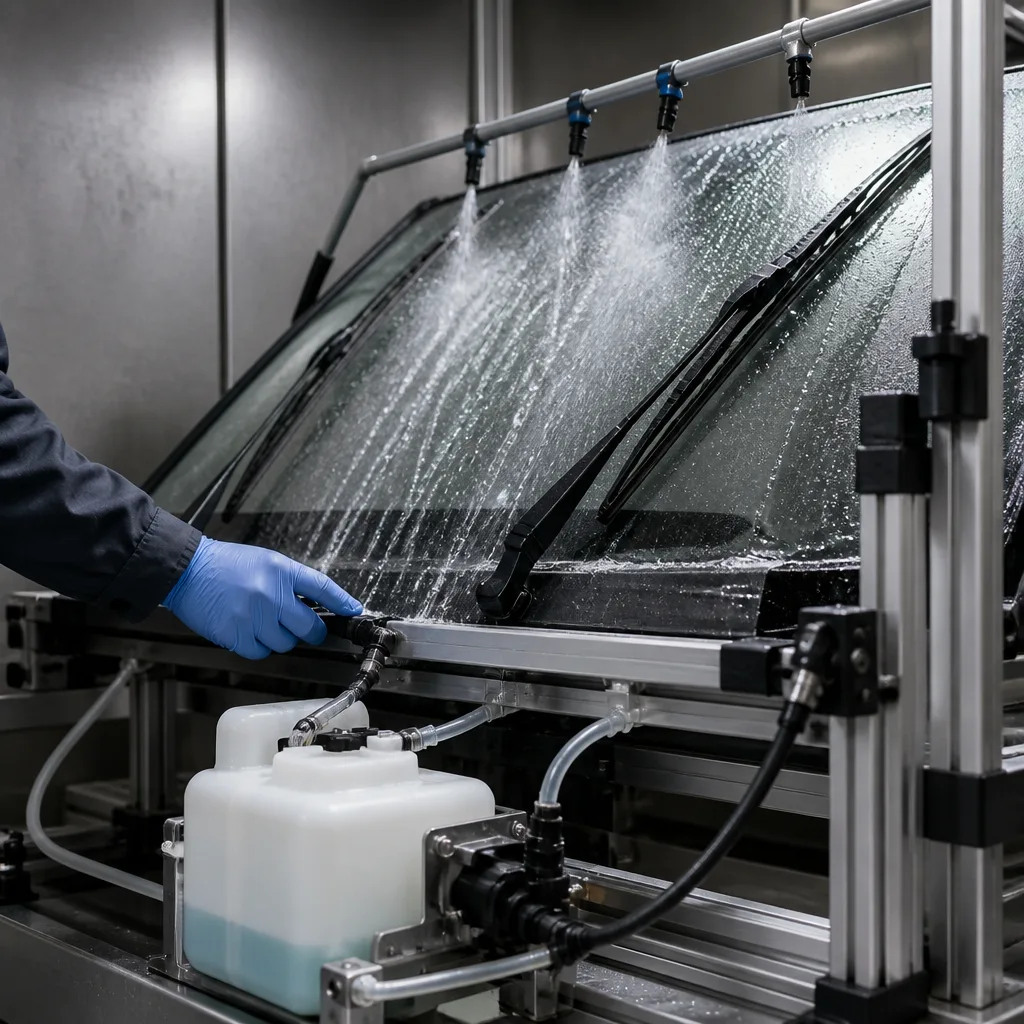
This standard is a technical procurement specification that defines the functional and material requirements for windshield washer systems in vehicles.
This standard outlines the performance, durability, and materials criteria that windscreen washer systems must meet in order to be approved for use in VW and Audi vehicles. It is part of a broader set of standards used by suppliers and testing laboratories to ensure components meet original equipment manufacturers' quality and safety expectations.
Typically, the key considerations are as follows:
- Functional requirements: Suitable spray pattern and coverage on the windshield, pump performance, nozzle functionality, fluid delivery under various conditions (pressure, temperature, flow rate), integration with wiper systems, and overall system reliability.
- Material requirements: Resistance of components (hoses, pumps, nozzles, tanks, seals) to cleaning fluids, extreme temperatures, aging, chemicals, and mechanical stress. This ensures the system does not deteriorate, leak, or fail prematurely.
- Testing and verification: A complete series of tests covering durability, environmental resistance, functional performance, and material compatibility. Laboratories typically perform these as a complete test package.
The VW TL 976 standard is closely related to other VW standards. For example,
- VW TL 934 Wiper systems (functional and material requirements).
- Material-specific delivery instructions (e.g., for plastics, elastomers, or liquids).
Windscreen washer systems are critical components for safety. They must operate reliably in all weather conditions to maintain clear visibility. The VW TL 976 standard helps ensure this.
- Consistent performance in production equipment.
- Compatibility with VW/Audi washers and vehicle electronics.
- Long-term durability to prevent failures that could lead to recalls or safety issues.
The main users of the VW TL 976 standard are:
- Suppliers of washing pumps, nozzles, tanks, hoses, and complete systems.
- Testing laboratories
- First and second-tier suppliers developing or verifying parts for the VW Group
Advanced laboratories generally offer testing services within the framework of the VW TL 976 standard, covering the following topics:
- Functional performance (spray pattern, volume, pressure).
- Material compatibility and aging.
- Environmental simulation (temperature cycling, fluid resistance, and so on).
In short, the VW TL 976 standard is primarily applied in automotive design verification, supplier qualification, and component testing. This standard focuses on windshield washer systems, including:
- Washing fluid reservoir
- Pumps and hoses
- Spray nozzles (jets)
- Sensors (e.g., liquid level sensors)
- Control and distribution components
This standard ensures that all these components function reliably not just as individual parts, but as a complete system. This standard specifically covers the requirements for windshield washer systems.
The basic requirements are determined as follows:
- Functional performance: The liquid cleaning system must provide the following:
- It must provide a sufficient volume of liquid to effectively clean the windshield.
- Consistent spray patterns must be maintained under varying operating conditions.
- It must operate reliably at various vehicle speeds and environmental conditions.
- Environmental resistance: Components must withstand the following:
- Extreme temperatures (cold start and high engine temperature zones).
- UV exposure and weather resistance.
- Chemical exposure from liquid cleaning fluids and contaminants.
- Durability and lifespan: The system is tested for the following:
- Long-term cyclical operation (pump life, nozzle clogging resistance).
- Resistance to aging and material degradation.
- Leak prevention for the entire lifespan of the vehicle.
- System integration: This standard emphasizes system-level verification. That is,
- All components must work together flawlessly.
- Fluid flow, pressure, and spray alignment must meet defined tolerances.
- Integration with vehicle electronics (e.g., sensors, warning signals) must be reliable.
- Safety and compliance: The washing system must provide the following:
- It must ensure the driver's clear visibility under all conditions.
- It must meet legal requirements for road safety.
- Malfunctions that could impair the driver's visibility should be avoided.
Typical verification under the VW TL 976 standard includes the following:
- Spray pattern analysis (coverage and homogeneity)
- Flow rate and pressure test
- Temperature cycling tests (freezing and thawing behavior)
- Chemical compatibility tests with washing fluids
- Durability testing for pumps and valves.
This standard is important for the following reasons:
- Vehicle safety: A properly functioning car wash system is essential for:
- Ensuring a clear view
- Preventing accidents in bad weather conditions.
- Quality consistency: This standard ensures the following:
- All suppliers must meet the same performance criteria.
- The components should be replaceable and reliable.
- Supplier qualification: Suppliers must comply with this standard for the following purposes:
- Delivering parts to VW production lines.
- Maintaining approved supplier status
- System reliability: By focusing on the entire system, the standard reduces the following:
- Field failures
- Warranty claims
- maintenance issues
The VW TL 976 is part of a broader ecosystem of Volkswagen standards, each encompassing specific systems such as those listed below:
- Surface coatings (e.g. VW TL 256)
- Cleaning requirements
- Mechanical components
These standards, together, ensure complete vehicle performance and durability.
In conclusion, the VW TL 976 standard is a specific but critical automotive standard that defines how windscreen washer systems should function, withstand environmental conditions, and be integrated into the vehicle. Despite focusing on a relatively small subsystem, its impact on driver visibility, safety, and overall vehicle quality makes this standard a significant specification.
For many years, our organization, with its competent and experienced team, has been understanding the needs of its clients, providing the advanced testing services they require, and assisting them in the establishment, implementation, and improvement of management systems. Within this framework, we also provide testing services compliant with the VW TL 976 standard.



