

PSA B39 6130 Measurement of Sound Insulation Seals in Small Cabins

PSA B39 6130 Measurement of Sound Insulation Seals in Small Cabins

The “PSA B39 6130 Measurement of sound insulation seals in small cabins” standard, developed by the French car manufacturer PSA Group, now part of Stellantis, describes a method for characterizing the insulation against noise caused by a seal. This method is applicable to all types of seals, such as door opening joints, shutters, sliding joints, and instrument panel nose joints.
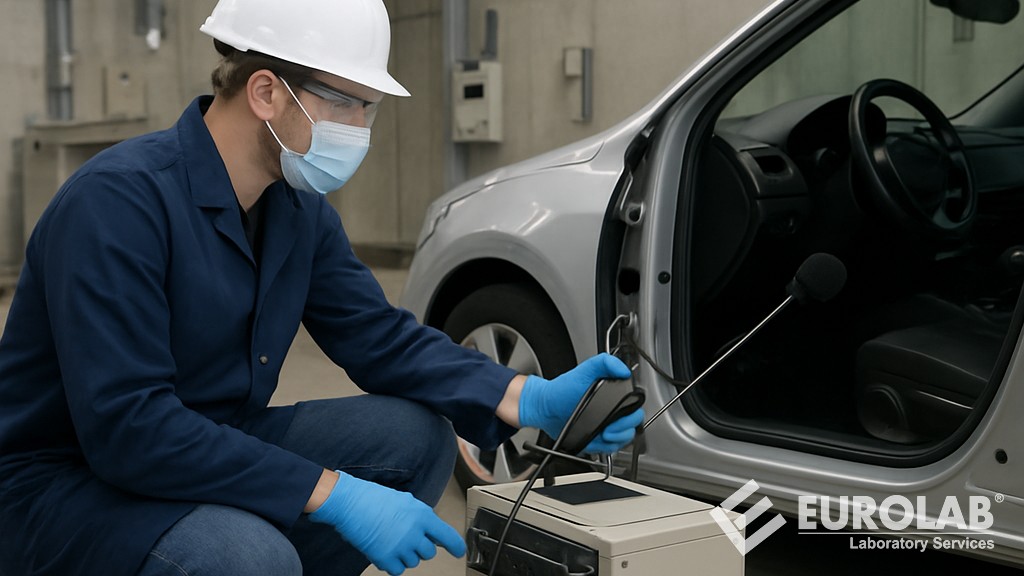
PSA B39 6130 Measurement of Sound Insulation Seals in Small Cabins

In principle, to characterize a given connection section, the operator must take three measurements:

  • Measurement of assembly in open slit = NR1 (reference condition = measurement in vacuum)
  • Measurement of the assembly at the connection point = NR2 (measurement under load)
  • Measurement with masked connection = NR3 (maximum state indicating connection improvement potential)

In each of these measurements, the object being measured is placed between the emission and reception chambers. The emission level is kept constant throughout the three measurements. The NR1-NR3 difference is a measurement of the insulation gain provided by the joint compared to the open slit. The NR1-NR2 difference corresponds to the insulation gain provided by the masked assembly and masked joint compared to the open slit. This corresponds to maximum insulation, and the measurement dynamics ensure this.

The PSA B39 6130 standard is part of a series of internal standards developed by the PSA Group. These standards define technical requirements for materials, components, and performance criteria used in vehicle manufacturing. The B39 standard series generally deals with sealing systems, adhesive materials, foams, and body-related components, focusing particularly on durability, sealing efficiency, and environmental resistance.

The PSA B39 6130 standard typically covers the following:

  • Sealing and foaming materials used in automotive applications.
  • Performance requirements for sealing compounds or expanding foams.
  • Application conditions (temperature, humidity, curing behavior).
  • Mechanical and physical properties after curing.

This standard defines the following basic characteristics:

  • Density and expansion rate (for foams)
  • Adhesion to surfaces (metal, plastic, painted surfaces)
  • Permanent deformation due to elasticity and compression.
  • Resistance to aging and environmental effects.

In terms of environmental resistance, materials must withstand the following:

  • Temperature cycle (e.g., from minus 40 degrees to plus 90 degrees or higher)
  • Moisture and water exposure
  • Chemical exposure (oils, fuels, cleaning agents)

Typical requirements in terms of mechanical performance include:

  • Tensile strength
  • Fracture elongation
  • Compression recovery
  • Vibration and fatigue resistance.

The PSA B39 6130 standard specifies the following standardized test procedures:

  • Thermal aging tests
  • Water absorption and leakage tests
  • Adhesion tests on different surfaces
  • Durability under cyclic loading

These tests ensure that the materials maintain their performance (throughout the vehicle's lifespan).

The PSA B39 6130 standard is widely used in the following areas:

  • Body sealing systems (doors, trunks, roofs)
  • Void-filling foams for noise reduction and structural reinforcement.
  • Waterproof and airtight solutions.
  • Anti-vibration and acoustic insulation components.

The goal of this process is to test the role and privilege manipulation in order to access the resources of a

  • Expanding foams used in poles
  • Sealing materials applied at body joints
  • Gaskets and sealing strips

This standard is important for the following reasons:

  • It ensures reliable sealing performance: Vehicles are constantly exposed to harsh environments: rain, dust, temperature changes and pressure differences. This standard ensures:
  • Sealants and foams prevent water leakage.
  • The cabin remains airtight.
  • Dust and pollutants are kept out.

Without such a standard, sealing performance varies, leading to quality issues such as water ingress or wind noise.

  • Improves vehicle comfort (NVH performance): One of the most important roles of sealing foams and materials is to improve noise, vibration, and harshness (NVH). This reduces road and wind noise, minimizes vibration transfer to the cabin, and increases overall ride comfort. This is particularly important in modern vehicles where customer expectations for quiet cabins are high.
  • Guaranteed long-term durability: The materials used in the seal must last for the entire lifespan of the vehicle (10-15 years or more). This standard ensures:
  • Resistance to aging, UV rays, and temperature changes.
  • Stability against moisture and chemical exposure.
  • Preservation of mechanical properties over time.

Without these, seals can crack, shrink, or lose their adhesive properties, leading to failures in the field.

  • Prevents corrosion and structural damage: Proper sealing is directly linked to corrosion protection.
  • It prevents water from entering hidden spaces.
  • It prevents rust formation in body structures.
  • It protects critical connections and reinforcements.

This contributes to both vehicle safety and longevity.

  • It supports production consistency: This standard provides clear requirements for suppliers and production teams:
  • Standardized material properties
  • Defined application and curing conditions.
  • Repeatable performance across all vehicles.

This reduces variability and ensures that every vehicle meets the same quality level.

  • It enables a lightweight and efficient design: Used in modern automotive design, these include:
  • Expanding foams instead of heavier components.
  • Multifunctional materials (sealing, insulation and reinforcement)

This standard ensures that these lightweight solutions still meet stringent performance criteria.

The PSA B39 6130 standard is important because it guarantees that sealing and foaming materials provide the following:

  • Reliable performance in real-world conditions.
  • Maintaining vehicle comfort and durability.
  • Protecting the structure from damage
  • Offering consistent quality throughout the production process.

In short, PSA B39 6130 evaluates the reliability and performance of sealants and foam materials used in automotive vehicles. By defining stringent material specifications, environmental resistance, and testing procedures, it helps manufacturers produce high-quality, durable, and comfortable vehicles.

For many years, our organization, with its competent and experienced staff, has been understanding the needs of its clients, providing the advanced testing services they require, and assisting them in the establishment, implementation, and improvement of management systems. Within this framework, we also provide testing services compliant with the PSA B39 6130 standard.

WhatsApp

