

The “GMW 16745 Water Jet Tests” standard, developed by General Motors Worldwide (GMW), includes a test procedure used to evaluate the resistance of painted and decorative exterior automotive components, specifically to high-pressure water jets. This test simulates the conditions to which components might be exposed during vehicle washing, particularly when a high-pressure water jet is used. This standard is particularly important for exterior painted plastic parts, decals, graphics, trims, and other decorative surfaces where satisfactory adhesion must remain after exposure to a powerful water jet.
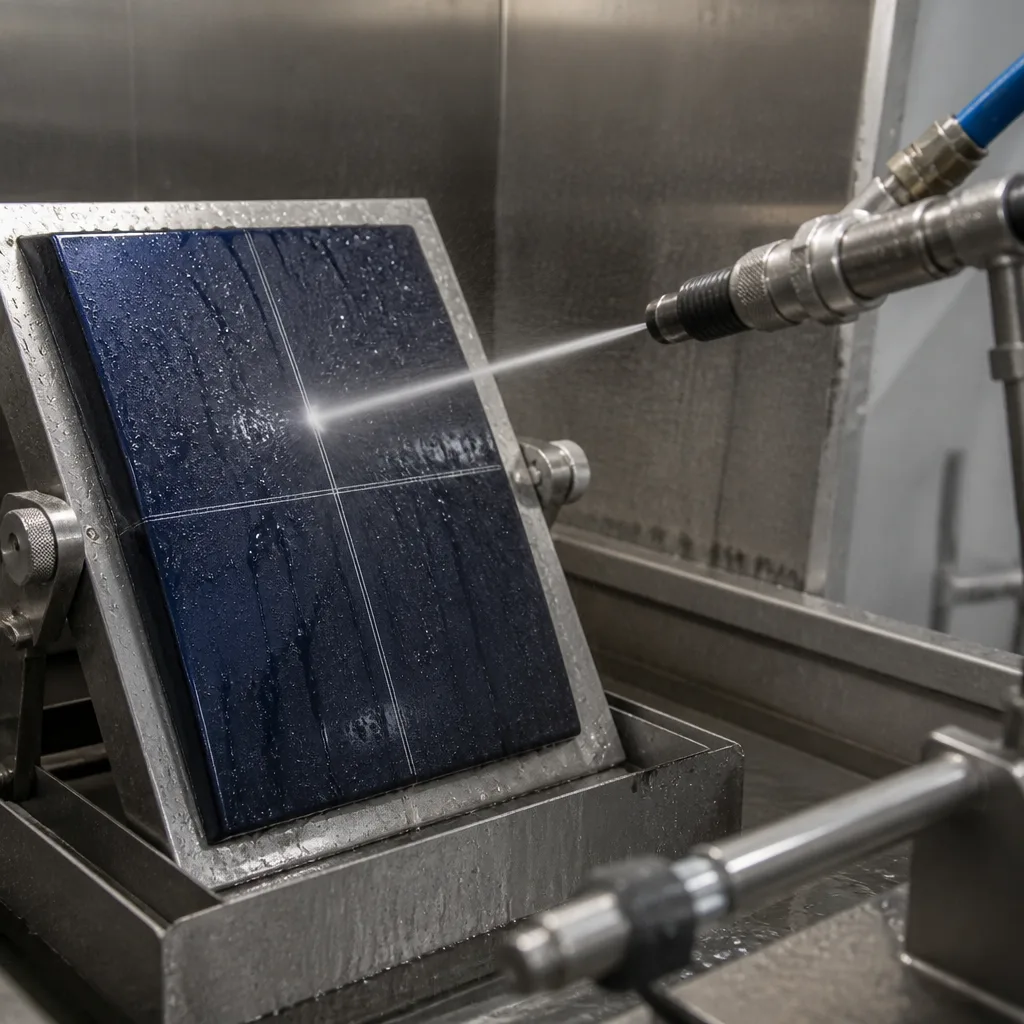
The primary purpose of the GMW 16745 standard is to determine whether a paint or coating remains adequately adhered to its substrate after exposure to high-pressure water. The latest version of this standard specifically describes the assessment after a coating has been razor-cut into the substrate and then subjected to a high-pressure water jet. This method is also applicable to decals and other exterior materials exposed to high-pressure water. This is important because a coating may appear satisfactory under normal conditions, but become vulnerable when water is forced into cut edges, scratches, interfaces, or areas of poor adhesion.
The GMW 16745 standard is primarily applicable to automotive exterior components, including:
While previous versions of this standard explicitly defined painted plastic components and exterior graphics as application areas, this final version has expanded the specified applicability to include other exterior materials that may encounter high-pressure water.
The basic concept in the tests is simple:
Therefore, the test provides an accelerated indication of how well an exterior surface coating can withstand aggressive water jet cleaning.
Water jet testing aims to represent the type of high-pressure spray encountered during vehicle washing. Critical parameters of the test system include factors such as water jet conditions, equipment configuration, sample positioning, and exposure procedure. Since these parameters directly affect the intensity of the test, laboratories applying the GMW 16745 standard must carefully control the test equipment and setup. Therefore, instead of relying on general pressure washing conditions, the standard must be adhered to using the precise requirements of the relevant current edition.
The latest version of the GMW 16745 standard specifies that Method A shall be used unless otherwise indicated. This standard has also been referenced by laboratories and testing organizations for water jet testing of painted exterior components.
For production or qualification tests, specific methods, equipment parameters, sample preparation, exposure conditions, and evaluation criteria must always conform to the GMW 16745 standard.
After water jet treatment, the following signs of deterioration are examined on the surface:
The goal isn't simply to determine whether the surface is wet or visually discolored. The critical consideration is whether the coating or graphic remains securely adhered to the substrate after waterjet application.
Automotive exteriors are routinely exposed to water, cleaning chemicals, road grime, temperature variations, and mechanical cleaning. High-pressure washing can be far more aggressive than normal rain. The GMW 16745 standard is important because it helps manufacturers identify coating systems that may degrade prematurely during vehicle cleaning. A coating that fails this type of test could potentially lead to:
In conclusion, water jet resistance is a crucial factor in verifying the durability of exterior painted and decorative components.
The GMW 16745 standard is a component of a broader group of coating and surface coating tests. For example, the GMW 14829 standard evaluates tape adhesion of paint coatings, the GMW 14700 standard addresses stone chip resistance of coatings, and the GMW 15891 standard evaluates coating curing using solvent scrubbing. These tests examine different failure mechanisms:
Using several supplementary tests provides engineers with a more complete picture of the exterior coating performance.
Meanwhile, the GMW 16745 standard has replaced the previous “GMNA GM9531P Water jet tests” standard for new designs. The GM9531P standard is listed as inactive for new designs, and the GMW 16745 standard has replaced it.
The main advantages of the GMW 16745 standard are as follows:
In conclusion, the GMW 16745 standard is an important automotive testing procedure for evaluating the durability and adhesion of exterior paints, coatings, graphics, decals, and related materials when exposed to high-pressure water jets. This test is particularly important for car wash conditions where a concentrated water jet could attack weak areas of the coating system.
For automotive suppliers, the GMW 16745 standard offers a practical way to verify that exterior coatings can withstand aggressive cleaning without unacceptable peeling, separation, or loss of adhesion. This therefore contributes to long-term appearance, coating durability, and perceived vehicle quality by the customer.
For many years, our organization, with its competent and experienced staff, has been understanding the needs of its clients, providing the advanced testing services they require, and assisting them in the establishment, implementation, and improvement of management systems. Within this framework, we also provide testing services in accordance with the GMW 16745 standard.
To get an appointment, to get more detailed information or to request an evaluation, you can ask us to fill in our form and reach you.

