

The “Stellantis MS.90186 Double-layer tape - Pressure-sensitive adhesive” standard, developed by Stellantis, a multinational automotive manufacturing company formed by the merger of Italian-American Fiat Chrysler Automobiles (FCA) and the French PSA Group, describes the requirements for closed-cell or cell-free tapes coated on both sides with a pressure-sensitive acrylic adhesive, used for bonding decorative or functional components, including but not limited to air seal strips, body side moldings, front panels, and bumpers.
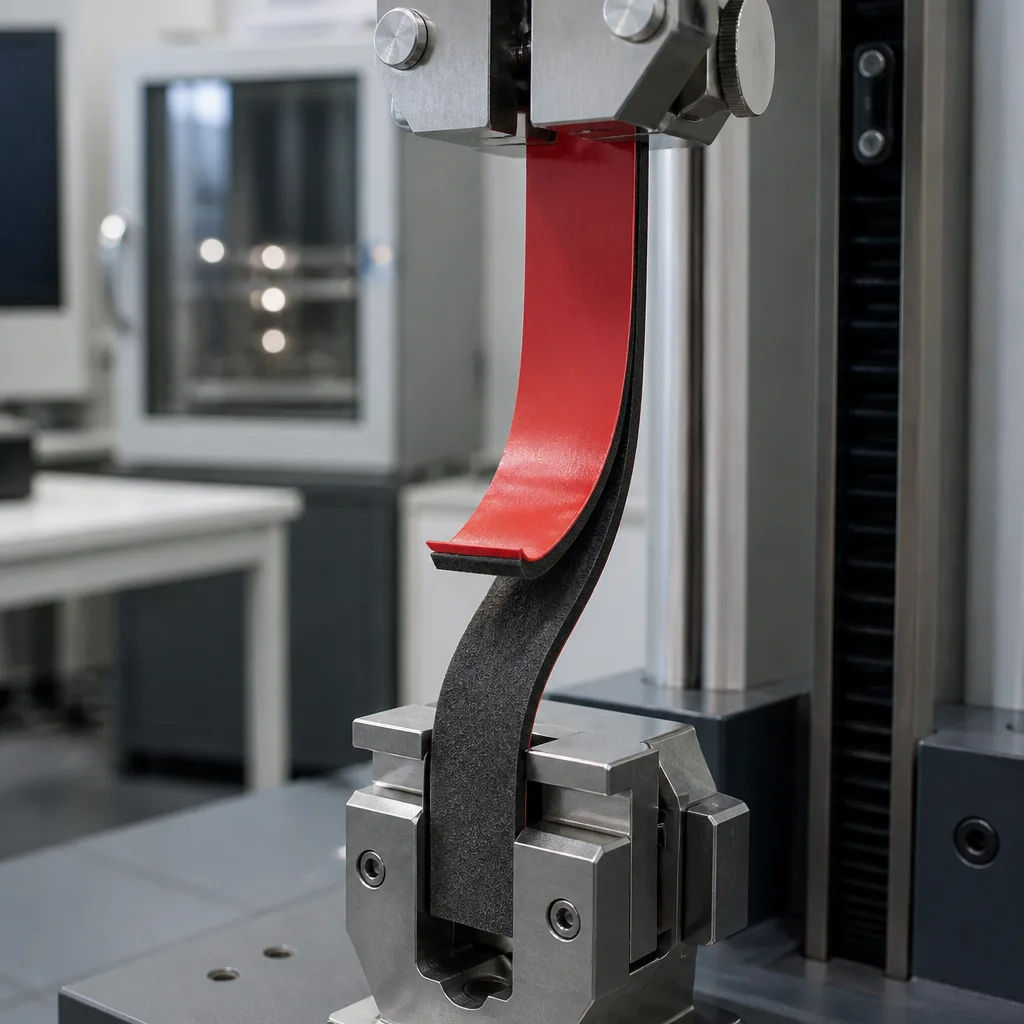
These tapes can be applied to painted body surfaces, elastomeric bumpers, plastic interior surfaces, and glass. However, since adhesion will vary between these surfaces, each surface must be independently verified for adhesive performance.
The foam tapes covered in this standard are manufactured with acrylic pressure-sensitive adhesives on both sides and a backing/core consisting of acrylic, polyurethane, polyethylene foam, or film.
In the Stellantis MS.90186 standard, the validation requirements are divided into two parts:
For the North American region, the application of tape to decorative or functional parts must be carried out in accordance with the relevant sections of the PS-4856 standard. The application of tape-backed parts to body surfaces, bumpers, or front panels must be carried out in accordance with PS-4856 and PF-8983 standards.
For the EMEA, APAC, and LATAM regions, the application of tape-backed parts to body surfaces, bumpers, front panels, or any other component must be carried out in accordance with standard 5.00750. Since these materials are nearing the end of their service life, the parts must comply with standard 71068.
In short, the Stellantis MS.90186 standard is a material specification developed for use within the Stellantis engineering standards system. Like many older Chrysler, Fiat, Peugeot, and PSA material specifications incorporated into Stellantis, the Stellantis MS.90186 standard defines the technical requirements that suppliers must meet before materials or components can be approved for manufacturing purposes.
This standard generally aims to ensure that specified automotive materials consistently meet defined performance, quality, durability, and manufacturing requirements throughout the vehicle lifecycle.
The primary objectives of the Stellantis MS.90186 standard are as follows:
The areas covered by the Stellantis MS.90186 standard are as follows:
Depending on the application, this specification may also refer to internationally recognized standards such as ASTM, ISO, SAE, or Stellantis' internal laboratory procedures.
Materials evaluated according to the Stellantis MS.90186 standard undergo various laboratory tests depending on the product category. The main test methods described are as follows:
The tests to be performed will vary depending on the intended use of the material.
Suppliers seeking certification under the Stellantis MS.90186 standard are generally expected to do the following:
These expectations are consistent with Stellantis’ broader supplier quality system and production requirements.
Meeting the requirements of the Stellantis MS.90186 standard offers several advantages:
The Stellantis MS.90186 standard is commonly used with the following:
Modern vehicles rely on thousands of materials sourced from suppliers worldwide. Even small variations in material properties can affect safety, durability, appearance, and production efficiency. The MS.90186 standard helps ensure that approved materials provide consistent performance regardless of supplier or manufacturing location.
By standardizing quality criteria, this specification supports reliable production, minimizes quality variation, and contributes to the long-term performance of Stellantis vehicles.
In conclusion, the Stellantis MS.90186 standard is an internal material specification that supports consistent material quality across the company's global vehicle programs. Its role is to define the qualification, testing, quality assurance, and supplier compliance requirements for the relevant material or component. Compliance with this standard helps manufacturers produce reliable, durable, and high-quality automotive products.
For many years, our organization, with its competent and experienced team, has been understanding the needs of its clients, providing the advanced testing services they require, and assisting in the establishment, implementation, and improvement of management systems. Within this framework, we also provide testing services compliant with the Stellantis MS.90186 standard.
To get an appointment, to get more detailed information or to request an evaluation, you can ask us to fill in our form and reach you.

