SES N 3305 Indoor Acoustic Materials
Developed by Suzuki Motor Corporation under the supplementary SES N standards (examples), the “SES N 3305 Interior Acoustic Materials” standard is a technical standard that defines the properties, test methods, and performance requirements of materials used to provide acoustic comfort inside vehicles in the automotive industry. This standard focuses specifically on noise control and improving sound quality within the vehicle cabin.
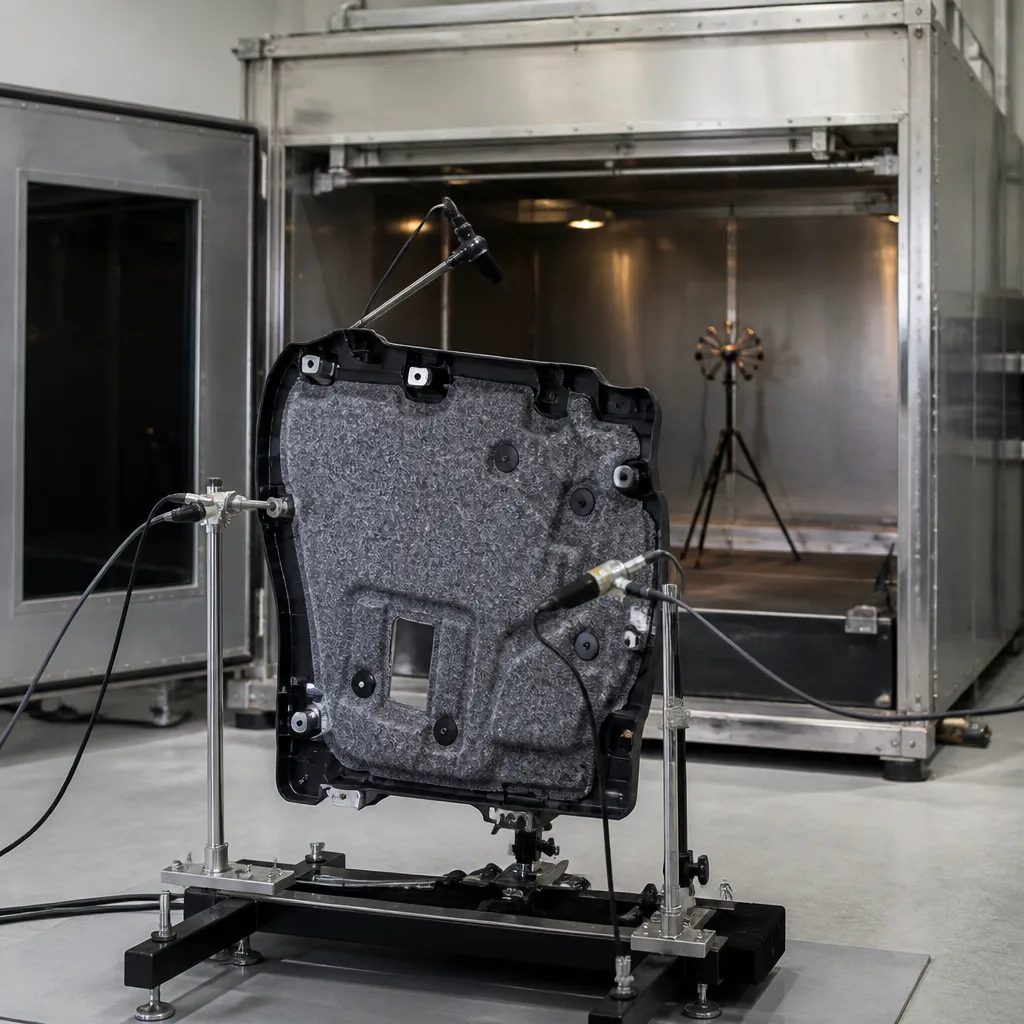
The primary purpose of the SES N 3305 standard is as follows:
- To reduce noise inside the vehicle.
- Controlling vibration-induced noise (NVH)
- Increasing passenger comfort
- To standardize the acoustic performance of materials.
Interior noise originates from the engine, road, wind, and vibrations, and controlling these sounds is critical for driving quality.
The use of interior acoustic materials in the automotive industry is related to controlling noise, vibration, and harshness (NVH) inside the vehicle cabin. These materials are strategically selected and placed to absorb, block, or reduce unwanted sound.
Before using any acoustic materials in the automotive industry, engineers determine the following:
- Noise sources: Engine, road, wind, HVAC
- Frequency range (low frequency vs high frequency)
- Transmission method (via air vs. through structure)
The goal of this process is to test the role and privilege manipulation in order to access the resources of a
- Low-frequency noise requires barriers and damping.
- High-frequency noise requires an absorber.
Choosing the right type of material is important:
- Sound absorbers: Polyurethane foam or non-woven fiber (felt) is used to reduce echo and airborne noise. Applications include:
- Ceiling (roof)
- Door panels
- columns
- Sound barriers: Mass-loaded vinyl or heavy rubber layers are used to block noise transmission. Applications include:
- Floor insulation
- Fire wall (engine-cabin separation)
- Damping materials: Bitumen sheets or viscoelastic layers are used to reduce vibration and structural noise. Their applications include:
- Floor panels
- Door interior panels
- Ceiling panels
- Multilayer systems: These are a combination of absorbent, barrier, and separator layers. For example, a carpet flooring system might have carpet on top, a foam absorbent in the middle, and a heavy barrier underneath.
Interior acoustic materials are not added randomly, they are integrated into the components:
- Floor system: Reduces road and tire noise. Multi-layer insulation system.
- Door system: Foam and barrier inside the door. Controls wind and traffic noise.
- Headliner: Lightweight, absorbent. Reduces echo and improves cabin acoustics.
- Dashboard/firewall: High-performance barrier. Prevents engine noise.
- Luggage compartment: Absorbs rear tire and exhaust noise.
After installation, the materials are tested according to the SESN 3305 standard for the following:
- Sound absorption coefficient
- Noise reduction coefficient
- Transmission loss
- Durability (heat, humidity, aging)
- Flammability
During the optimization process, engineers balance the following:
- Acoustic performance
- Weight (fuel efficiency effect)
- Cost
- Safety (fire resistance)
For example, a heavier barrier provides better noise reduction but increases vehicle weight, leading to higher fuel consumption.
In conclusion, the use of wind-resistant indoor acoustic materials includes the following:
- Identifying noise sources.
- Choosing the right type of material
- Integration into vehicle components
- Tested according to standards (SES N 3305 standard)
- Optimizing performance based on weight and cost.
In short, these are not just materials, but engineering solutions precisely placed to make the vehicle quieter and more comfortable.
The main materials covered by the SES N 3305 standard are as follows:
- Sound-absorbing materials:
- polyurethane foams
- Felt (nonwoven) materials
- Fiber-based panels
The goal is to reduce echo by absorbing sound energy.
- Sound insulation materials: Heavy-duty layered barriers (mass-loaded vinyl).
The purpose is to prevent sound from passing through.
- Damping materials: Bitumen-based or viscoelastic layers.
The aim is to reduce noise caused by vibration.
- Composite systems: Combinations of absorbent, barrier, and separator materials.
Acoustic materials generally determine the sound quality of an environment by controlling sound absorption, reflection, and transmission.
SES N 3305 typically evaluates the following characteristics:
- Acoustic performance
- Sound absorption coefficient
- NRC (noise reduction coefficient)
- Frequency-based performance
- Noise reduction:
- Decrease in cabin noise level.
- Echo control
- Physical characteristics:
- Density
- Thickness
- Flexibility
- Safety and durability:
- Flame retardancy
- Temperature resistance
- Moisture and aging resistance
Acoustic performance is generally based on sound absorption capacity, measured by standards such as “ISO 354 Acoustics - Measurement of sound absorption in an echo chamber”.
Materials conforming to the SES N 3305 standard are used in the following areas within the vehicle:
- floor carpet
- Door panels
- Ceiling trim
- Luggage compartment linings
- Engine compartment insulation
- Gaps inside the dashboard
The SES N 3305 standard is considered important for the following reasons:
- Comfort: A quieter cabin signifies a higher quality driving experience.
- Brand perception: In premium vehicles, low noise levels are a critical indicator of quality.
- Regulation and quality control: Ensures comparability among manufacturers.
- NVH (noise, vibration, harshness) optimization: Improves NVH performance.
In conclusion, the SES N 3305 standard,
- It describes the selection, performance, and testing of in-vehicle acoustic materials.
- Noise reduction is a critical standard for comfort and quality.
- In modern automotive design, noise, vibration, and harshness (NVH) engineering is one of the cornerstones.
For many years, our organization, with its competent and experienced team, has been understanding the needs of its clients, providing the advanced testing services they require, and assisting them in the establishment, implementation, and improvement of management systems. Within this framework, we also provide testing services compliant with the SES N 3305 standard.



