

The “BMW AA 0264 Salt Water Exposure Multiple Stone Impact Test” standard, developed by BMW, a multinational vehicle manufacturer, describes a test method that evaluates how well automotive coatings and paint systems can withstand mechanical damage from stone impacts and subsequent corrosion accelerated by salt water. This test is part of BMW’s broader “AA” standards package, which covers various material validations for exterior and interior components. It is typically required for initial sample approvals or major production stages for painted parts such as body panels, bumpers, or trim.
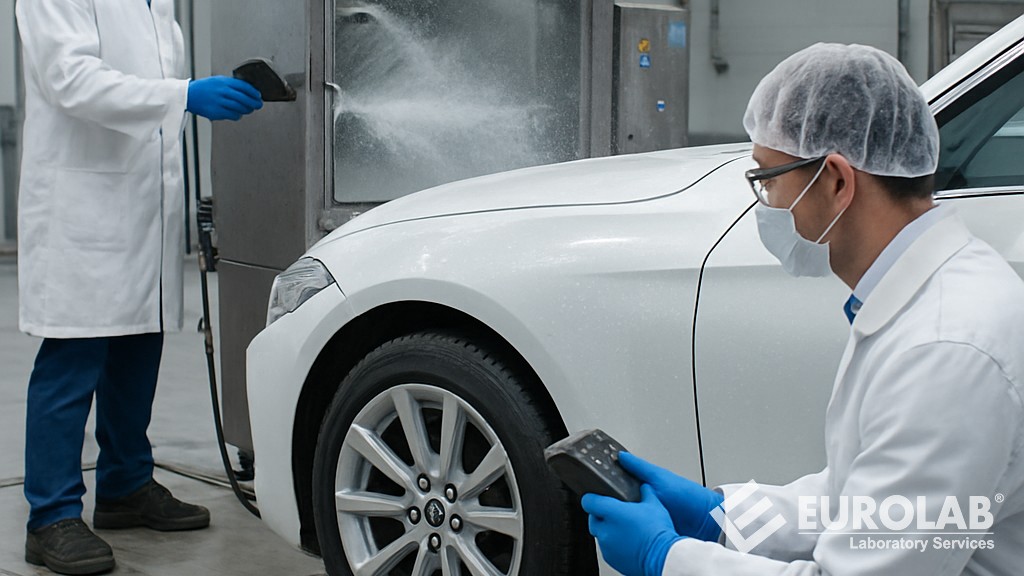
This standard is a key benchmark in automotive corrosion testing. As a leading automotive manufacturer, BMW applies rigorous internal standards for material and coating durability to ensure long-term vehicle reliability, especially in challenging environments. One such standard is the BMW AA-0264 standard, which includes a specialized corrosion resistance test focused on simulating real-world damage to painted surfaces.
In real-world driving, vehicles frequently encounter the following:
Standard salt spray tests (such as ASTM B117 or BMW AA-0324 standards) assess homogeneous corrosion but do not account for mechanical damage. The BMW AA-0264 standard fills this gap by combining multi-impact stone chip testing (similar to standards such as BMW AA-0079 or SAE J400) with salt water immersion or exposure, providing a more realistic simulation of underbody or underbody panel corrosion under winter conditions. This allows BMW to ensure robust protection with cathodic electroplating (e-coating), primers, base coats, and clear coatings, minimizing warranty claims related to rust penetration.
This testing method essentially follows these steps:
This test is more rigorous than basic stone impact tests and complements cyclic corrosion tests such as the BMW AA-0224.
The BMW AA-0264 standard is one of the brand's many corrosion-related standards and includes the following:
Independent laboratories offer the AA-0264 testing service for suppliers verifying parts for BMW vehicles. This standard underscores BMW's commitment to durability, reinforcing its brand reputation for producing corrosion-resistant vehicles even in harsh climates.
The BMW AA-0264 standard combines a multiple-impact stone chip test with saltwater exposure. This test is performed by throwing gravel or stones at a vehicle's painted or coated surfaces multiple times to simulate real-world damage, and then exposing it to saltwater to accelerate corrosion.
The main reasons why this standard is considered important are:
Without such rigorous testing, coatings might pass basic impact tests but fail in real-world use, leading to widespread corrosion problems. This standard provides robust corrosion protection tailored to demanding driving conditions.
For many years, our organization, with its competent and experienced team, has been understanding the needs of its clients, providing the advanced testing services they require, and assisting them in the establishment, implementation, and improvement of management systems. Within this framework, we also provide testing services in accordance with the BMW AA 0264 standard.
To get an appointment, to get more detailed information or to request an evaluation, you can ask us to fill in our form and reach you.

