Ford DVM-0017 Interior Material Soiling and Cleaning Behavior
Standards for laboratory testing methods or material verification methods developed by Ford are generally used to evaluate the following:
- Coatings and paints
- Adhesives and sealants
- Interior furnishing materials
- Corrosion resistance
- Environmental durability
- Mechanical performance of automotive components
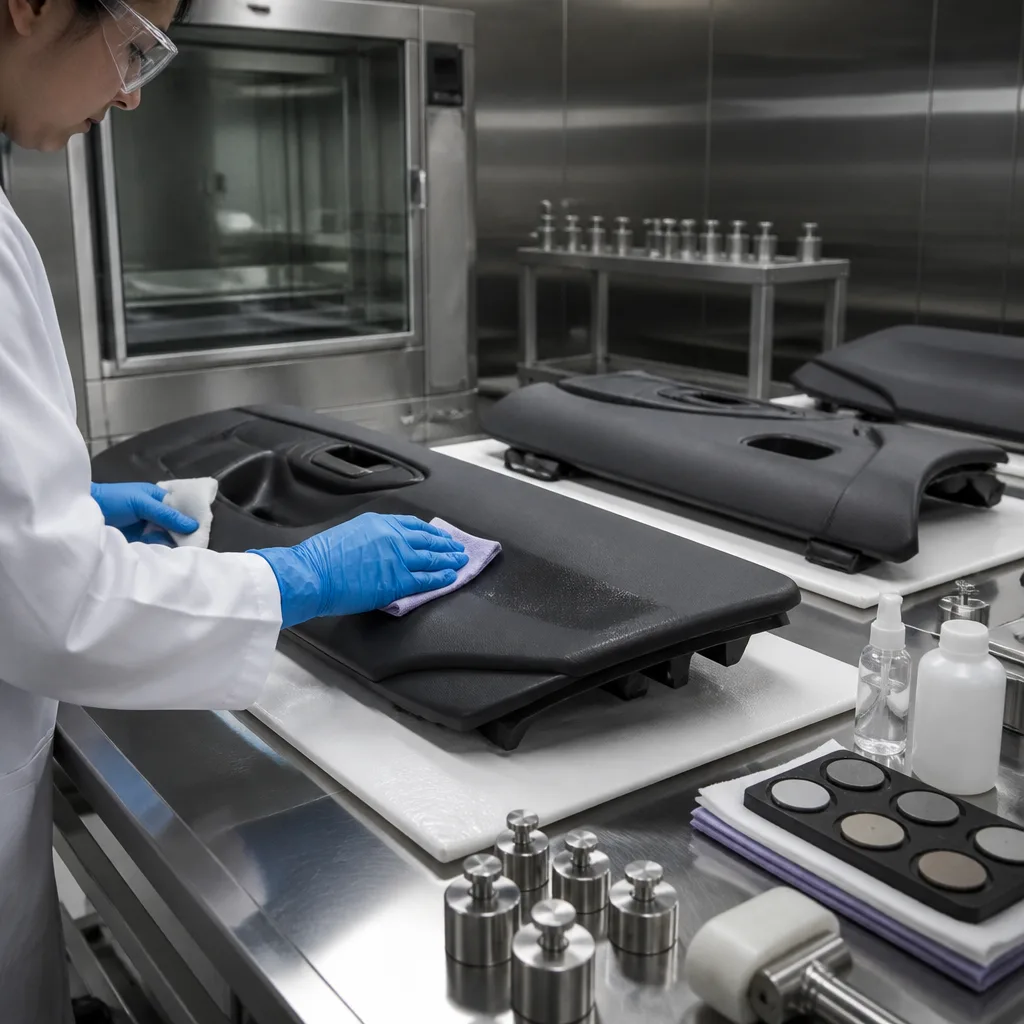
One such standard developed by Ford Motor Company (Ford), “Ford DVM-0017 Contamination and Cleaning Behavior of Interior Materials,” describes a procedure for determining how vehicle interior materials respond to contamination and cleaning.
In short, the Ford DVM-0017 standard is a Ford engineering test specification used to evaluate the stain resistance and cleanability of automotive interior materials. This standard assesses how well interior surfaces withstand common contaminants and how effectively they can be cleaned without permanent staining, discoloration, gloss change, or surface degradation.
Vehicle interiors are routinely exposed to the following substances:
- Dirt and mud
- Coffee, carbonated drinks, and food leftovers.
- Oil and grease
- Cosmetics and sunscreen
- Hand lotions and disinfectants
- Daily dust and debris
The Ford DVM-0017 standard helps ensure that interior materials maintain their appearance throughout the vehicle's lifespan, despite repeated soiling and cleaning.
This standard can be applied to various internal components, including:
- Upholstery fabrics
- Leather and synthetic leather
- instrument panels
- Door trim panels
- Center console surfaces
- Armrests
- Ceiling tiles
- Internal plastic components
- Decorative flooring materials
These materials are tested before being approved for vehicle production.
Contamination and cleanability tests typically follow these steps:
- Preparation of test samples: Material samples are conditioned under controlled laboratory conditions.
- Application of pollutants: Standardized pollutants are applied to the surface.
- Exposure time: The contaminant remains on the material for a specified period.
- Cleaning procedure: Samples are cleaned using specified cleaning methods and materials.
- Assessment: Visual inspection or instrumental measurements determine the extent of stain removal and surface damage.
In these tests, indoor materials are evaluated against contaminants that generally represent real-world use. The main contaminants are:
- Dust and dirt
- Stoneware
- Engine oil
- Coffee
- Ketchup and leftovers
- Cosmetics
- suntan cream
- hand sanitizer
These pollutants simulate years of normal customer use.
- After the cleaning process, the materials are evaluated in the following respects:
- Residual staining
- color change
- Change in surface gloss
- Tissue change
- Softening or hardening of the surface
- Coating damage
- Maintaining the overall appearance
Materials must meet Ford's acceptance criteria before being approved.
The Ford DVM-0017 standard, along with other original equipment manufacturer cleanability specifications, serves a similar purpose.
- Ford FLTM BN 112-08 Interior material soiling and cleanability test.
- General Motors GMW3402 Dirt and cleaner resistance of automotive materials.
- Stellantis LP-463KC series: Cleanability and soiling of interior trims.
- VDA 230-212 Determination of fouling and cleaning properties
- BMW GS97034 The soiling behavior and cleaning ability of interior materials.
The Ford DVM-0017 standard is necessary because vehicle interiors are constantly exposed to dirt, food, beverages, cosmetics, body oils, and cleaning agents throughout their lifespan. This standard helps ensure that interior materials can withstand these effects while maintaining their appearance and functionality. The main reasons why this standard is important are:
- Ensures a long-lasting interior appearance: Customers expect their vehicle interiors to remain attractive for many years. Materials that are permanently stained or discolored after normal use can make the vehicle look old and neglected. This standard verifies that interior surfaces can be effectively cleaned and retain their original appearance.
- Improves customer satisfaction: The cleanliness and appearance of seats, instrument panels, door panels, and consoles greatly influence a customer's perception of vehicle quality. Stain-resistant and easy-to-clean materials contribute to a better ownership experience.
- Supports material selection: Ford engineers evaluate multiple material options during the vehicle development process. This standard provides a consistent method for comparing fabrics, leathers, plastics, coatings, and upholstery materials and identifying those that deliver superior cleanability and stain resistance.
- It simulates real-world use: Vehicle interiors encounter numerous pollutants, including:
- Coffee and carbonated drinks
- Food spills
- Mud and dust
- Sunscreen and cosmetic products
- Hand lotions
- Oil and grease
- Cleaning chemicals
This standard helps ensure that materials can withstand these common exposures under realistic conditions.
- Prevents premature material deterioration: Some cleaning agents can damage coatings, alter gloss levels, fade colors, or affect surface texture. This standard helps prevent premature aging of interior components by evaluating whether routine cleaning causes adverse effects.
- Reduces warranty and service costs: Low-performance materials may require replacement due to staining, discoloration, or surface damage. By identifying unsuitable materials before production, Ford reduces warranty claims, service costs, and customer complaints.
- It establishes consistent supplier requirements: Ford sources its interior materials from suppliers around the world. This standard ensures consistent quality across different production sites by providing a standardized testing procedure that allows all suppliers to evaluate materials using the same criteria.
- It protects brand reputation: Interior quality is a key factor in vehicle reviews and customer loyalty. Materials that remain clean and visually appealing throughout the vehicle's lifespan help reinforce Ford's reputation for quality and durability.
In conclusion, the Ford DVM-0017 standard is a specialized materials performance test that evaluates the resistance of automotive interior materials to daily soiling and their ability to be restored through cleaning. This specification plays a vital role in ensuring that vehicle interiors maintain their appearance, durability, and perceived quality throughout the vehicle's lifespan.
For many years, our organization, with its competent and experienced team, has been understanding the needs of its customers, providing the advanced testing services they require, and assisting them in the establishment, implementation, and improvement of management systems. Within this framework, we also provide testing services compliant with the Ford DVM-0017 standard.



