

The SAE J1864 Method for evaluating material separation under pressure in automotive sealants under static conditions, an aerospace standard , describes a method for measuring pressure-induced separation in automotive sealants and determining the probability of equipment failure (clumping) resulting from this separation.
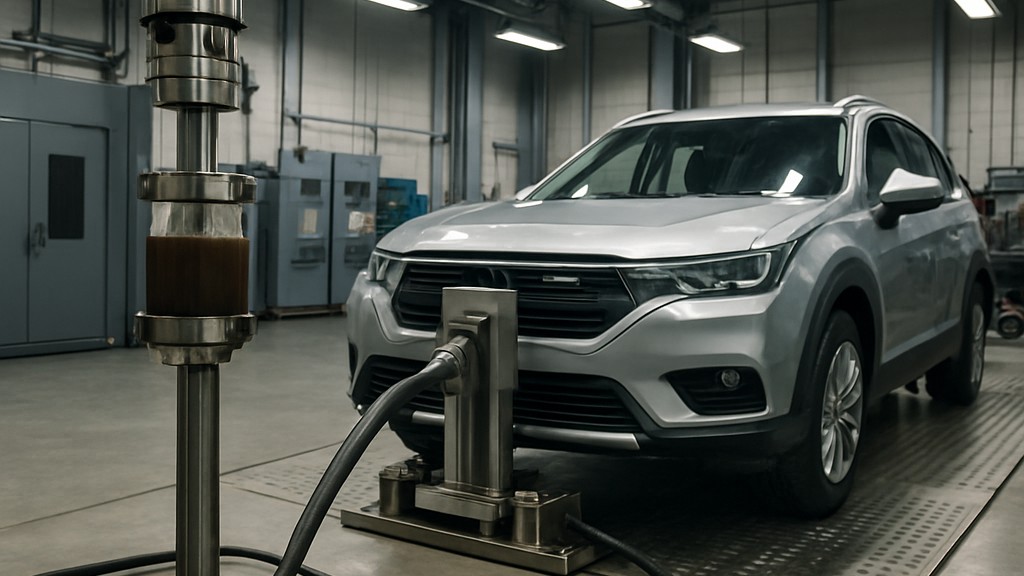
Sealants in automotive plants are often transported and applied using airless pumping equipment with internal pressures that can exceed 20,7 MPa (3000 psi). Some sealants tend to separate when subjected to these pressures, causing varying degrees of blockage in the system. This pressure-induced agglomeration, or blockage of pumps and conveying lines, reduces the sealant's delivery rate and can shut down the system entirely.
Separation tests on sealants with measured separation volumes of over 6 mL at 25 degrees Celsius (20,7 MPa) for 72 hours have been known to cause “clumping” problems in production pumping equipment. However, sealants with measured separation volumes of 3 mL or less do not cause this type of problem.
In principle, this method involves injecting automotive sealant into a pressure vessel assembly equipped with a movable piston cap. The sealant is then subjected to static pressure by applying a force to the pressure vessel assembly through the piston cap. This force is provided by a high-powered air cylinder for a specified period, after which the pressure is released, the cylinder is disassembled, and any dissociated material present is measured.
SAE J1864 is a technical standard focused on the accurate specification of refrigerants used in mobile air conditioning systems. First published in the early 1990s and updated periodically, this standard plays a crucial role in ensuring safety, efficiency, and environmental compatibility in automotive air conditioning maintenance and service.
The SAE J1864 standard specifies minimum performance criteria for refrigerant identifiers, devices used to verify the type and purity of refrigerant in mobile air conditioning systems. These identifiers are essential for preventing contamination of refrigerant supplies during vehicle maintenance, protecting system components, and ensuring regulatory compliance.
The main objectives of this standard are:
SAE J1864 applies to automotive service equipment used for refrigerants such as:
This standard is often referenced by:
The general criteria defined in the SAE J1864 standard are:
The SAE J1864 standard is vital for many reasons. The main reasons for this standard are:
Following the SAE J1864 standard helps prevent these costly problems by ensuring only clean and correct refrigerant is used in vehicle systems.
Consequently, SAE J1864 is important because it ensures the safe, clean, and environmentally sound maintenance of mobile air conditioning systems. It ensures the reliability and safety of refrigerant identification in the automotive industry.
Our organization, which has been supporting businesses across all sectors for years through a wide range of testing, measurement, analysis, and evaluation activities, has a strong team of employees who closely follow global developments in science and technology and are constantly improving themselves. In this context, we also provide testing services in accordance with the standard "SAE J1864 Method for Assessing Material Separation Under Static Pressure in Automotive Sealants."
To get an appointment, to get more detailed information or to request an evaluation, you can ask us to fill in our form and reach you.

