

Developed by the Daimler-Benz automotive company, the “Daimler MS-JP-9-4 Flammability Test of Interior Materials” standard is an internal automotive materials testing standard used to evaluate the flammability behavior of vehicle interior materials.
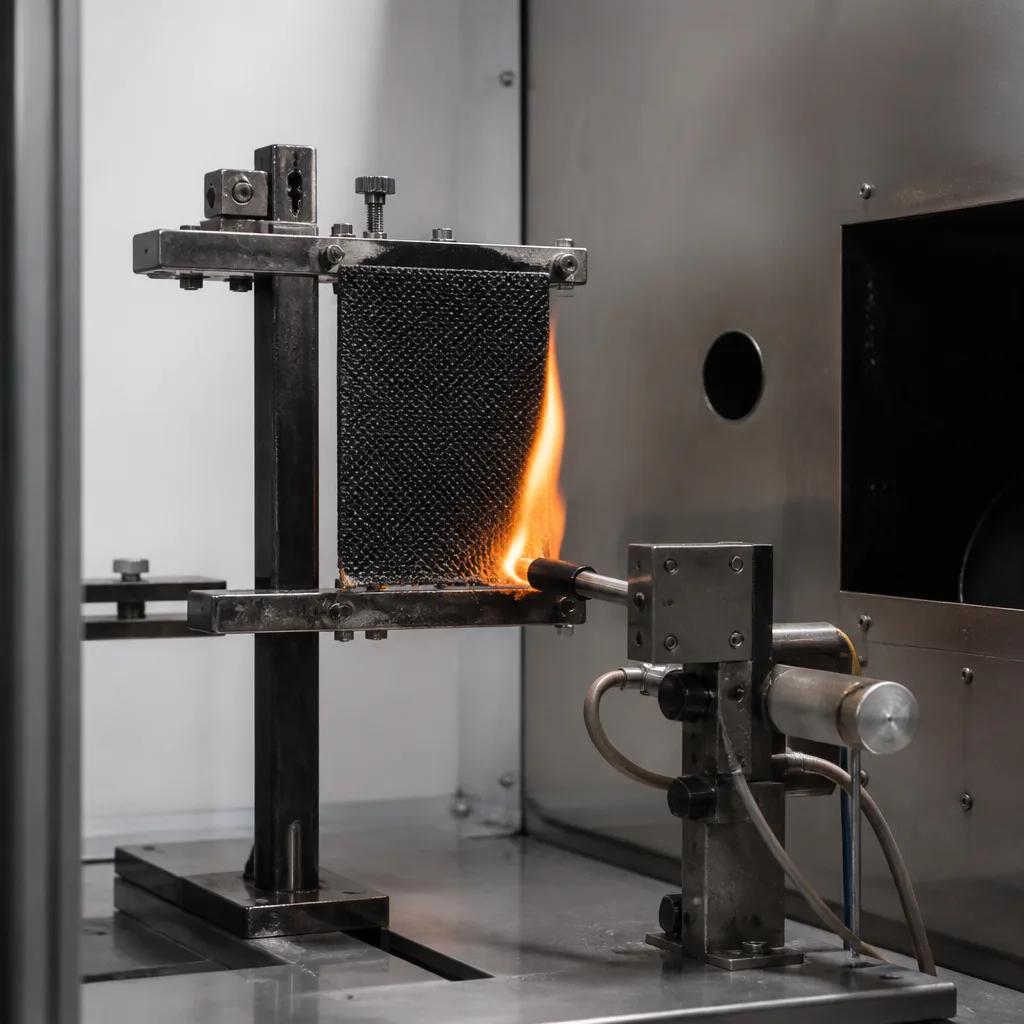
Flammability standards are crucial in the automotive industry because passenger compartment materials (including plastics, seat foams, textiles, carpets, and upholstery panels) must resist rapid flame spread in the event of an electrical malfunction, an overheating component, or a fire. Daimler specifications such as MS-JP-9-4 are part of broader original equipment manufacturer verification systems used to ensure components meet safety, durability, and regulatory requirements before being approved for manufacturing purposes.
This standard is related to laboratory verification processes carried out by accredited automotive testing organizations. In general, this procedure includes the following:
These types of tests are generally consistent with internationally accepted automotive fire safety methodologies, where a sample is exposed to a controlled ignition source and engineers measure flame propagation rate, self-extinguishing behavior, melting properties, smoke generation, and afterburn duration. The Daimler MS-JP-9-4 standard is also used in the United States in conjunction with regulations such as FMVSS 302 and relevant ISO or DIN fire resistance procedures used in Europe.
The aim of the Daimler MS-JP-9-4 standard is not only legal compliance but also passenger protection and quality assurance. Modern vehicles incorporate numerous polymer-based lightweight materials, and manufacturers must strike a balance between comfort, weight reduction, sustainability, and fire resistance. Therefore, interior material validation plays a crucial role in vehicle engineering, especially in luxury vehicles where soft-touch and composite materials are widely used.
Automotive suppliers seeking approval to supply components for Mercedes-Benz production programs must document that their products meet the MS-JP-9-4 material specification before entering the supply chain.
Interior material flammability testing is a safety assessment process used to determine how easily materials inside a vehicle, aircraft, train, building, or electronic product ignite and burn when exposed to a flame or heat source. In the automotive industry, this testing is particularly important because passenger compartments contain many flammable materials, including: seat foam, fabrics, carpets, plastic trim, insulation, instrument panels, headliners, and cable management systems.
Original equipment manufacturers rely on the Daimler MS-JP-9-4 standard to ensure these materials do not allow fire to spread rapidly inside the cabin.
This testing method helps engineers verify that materials:
This test is a critical part of vehicle safety certification and regulatory compliance.
During testing, a sample of the material is cut to a specific size and exposed to a controlled flame for a defined period of time. Typical measurements include:
A common method for vehicle interiors is the horizontal burn test.
In general, the testing method follows these steps:
Common automotive standards include the following:
Commonly tested materials include:
Modern vehicles increasingly utilize lightweight polymer and composite materials to improve fuel efficiency and electric vehicle range. However, many polymers are flammable, so manufacturers must carefully design flame-retardant formulations.
In electric vehicles, thermal phenomena involving batteries make fire safety engineering even more critical.
A material may be considered a failure under the following conditions:
For example, the FMVSS 302 standard generally limits the combustion velocity to 102 mm/min. Materials that perform better than this threshold are considered safer for passenger compartments.
Beyond the automotive industry, flammability testing is widely used in the following areas:
These tests help reduce fire risk and improve passenger safety in many sectors.
Flammability testing is necessary because interior materials pose a significant fire hazard. This test helps manufacturers prevent small ignition incidents from rapidly spreading, life-threatening cabinet fires. This standard is considered important for the following reasons:
For many years, our organization, with its competent and experienced team, has been understanding the needs of its clients, providing the advanced testing services they require, and assisting them in the establishment, implementation, and improvement of management systems. Within this framework, we also provide testing services compliant with the Daimler MS-JP-9-4 standard.
To get an appointment, to get more detailed information or to request an evaluation, you can ask us to fill in our form and reach you.

