

DIN 73379 NBR Fuel Hose

DIN 73379 NBR Fuel Hose

The "DIN 73379 NBR fuel hose" standard, developed by the German Institute for Standardization (DIN), specifies requirements for fuel, oil, and vapor hoses used in automotive and mechanical applications. This standard defines the construction, dimensions, materials, performance characteristics, and test methods for hoses primarily used to transport:
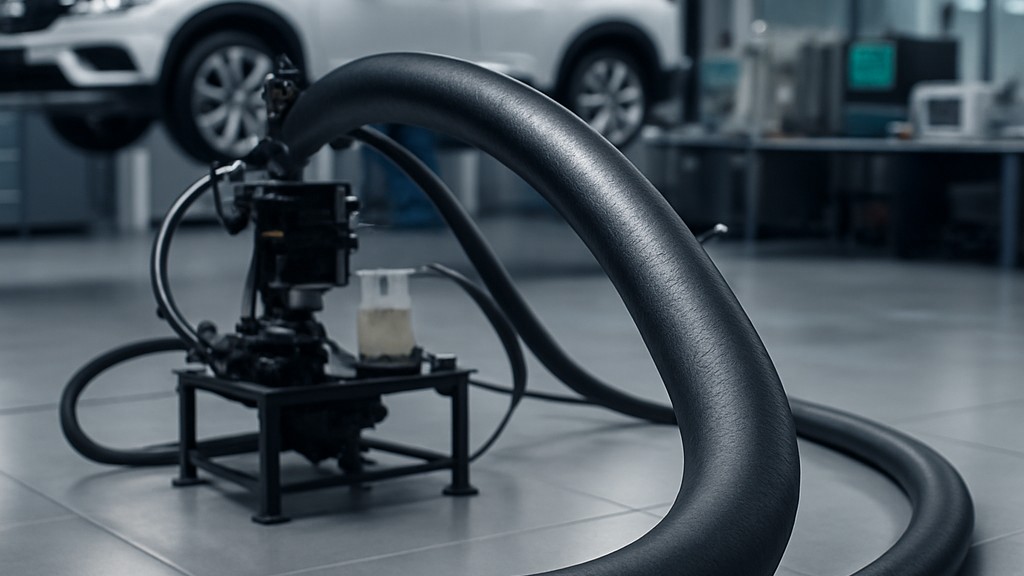
DIN 73379 NBR Fuel Hose

  • Fuel (gasoline, diesel, biodiesel)
  • Fat
  • Air Defence
  • Vapor (e.g. fuel vapors)

This standard has multiple parts or types depending on specific applications and performance requirements:

  • Type A = Suitable for non-pressurized fuel and oil lines.
  • Type B = Designed for pressurized fuel systems.
  • Type C = Used for return lines, steam lines or low pressure applications.

Each type specifies details such as:

  • Inner diameter
  • Wall thickness
  • Material properties (e.g. NBR, CR or FKM rubber)
  • Resistance to temperature, pressure and various liquids

The main features of this standard are:

  • Fuel and oil resistance
  • Temperature resistance (varies depending on material and hose type)
  • Mechanical strength
  • Permeability limits (for vapor control)
  • Durability under dynamic conditions (vibration, pressure changes)

The main areas of use of the DIN 73379 standard are:

  • Automotive fuel lines
  • Small engines
  • Industrial machinery
  • Marine and agricultural equipment

The DIN 73379 standard has been partially superseded or supplemented in some markets by newer standards such as “ISO 7840 Small boats - Fire-resistant fuel hoses” or “SAE J30 Fuel and oil hoses”.

When selecting or replacing a hose, it is necessary to verify that:

  • Exact type and revision of the standard
  • Compatibility with fuel type (e.g. ethanol blends, biodiesel)
  • Required pressure and temperature specifications

In short, DIN 73379 is a German industrial standard that defines the characteristics of rubber and plastic hoses used primarily in automotive and engine construction to transport fluids such as fuel, oil, and coolant. The standard has several components, depending on the hose type and its specific application:

  • The standard “DIN 73379-1 Fuel hoses - Part 1: Dimensions, materials, marking” describes the hose types valid for gasoline and diesel, dimensional tolerances (inner/outer diameters, length, etc.), permissible materials for tube and cover, operating temperature ranges and required hose markings (standard, size, date, batch).
  • “DIN73379-The standard “2 Fuel hoses - Part 2: Requirements and tests” describes the performance criteria and test methods. For example,
    • Pressure resistance (operation and burst)
    • Flexibility and bending tests
    • Fuel and oil permeability limits
    • Aging (thermal, fuel exposure)
    • Marking and visual inspections

In the latest update of this standard, previous parts 1 and 2 were combined into a single document and include:

  • All dimensions and material requirements
  • Detailed testing methods
  • Updated material combinations (e.g. low permeability bladders)

Part 3, previously envisioned to cover additional hose types (e.g., textile-reinforced, high-temperature variants), is expected to be published separately in the future (DIN 73379 - 3 Fuel hoses - Part 3: Functional requirements on fuel hose assemblies).

The general requirements in the DIN 73379 standard are determined as follows:

  • Materials: Typically based on elastomers (e.g. NBR, CR) or thermoplastics (e.g. PA, PE).
  • Applications: Fuel hoses, oil hoses, vacuum hoses, cooling hoses.
  • Pressure ratings: Varies depending on type and application. Some types are for low-pressure return lines, others for high-pressure fuel injection.
  • Temperature range: Typically minus 30 degrees to plus 125 degrees, sometimes higher for certain classes of hose.
  • Permeability limits: Especially important for fuel hoses (hydrocarbon permeability limits).

The DIN 73379 standard covers multiple types and classes. For example,

  • Type A: Low pressure hose for fuel, oil, air
  • Type B: Higher resistance to temperature and chemicals
  • Type C: Typically used for fuel injection or higher pressure applications

Modern features may include:

  • Type 1: Standard structure
  • Type 2A/2B: Improved fuel resistance or lower permeability
  • Type 3E: Special high temperature applications

DIN 73379 hoses are typically used in:

  • Automotive fuel lines
  • Small engines
  • Industrial machinery
  • Marine and agricultural equipment

The DIN 73379 standard has been partially replaced or supplemented by newer standards such as DIN EN ISO 7840 or SAE J30 in some markets.

Our organization, which has been supporting businesses across all sectors for years through a wide range of testing, measurement, analysis, and evaluation activities, has a strong team of employees who closely follow global developments in science and technology and are constantly improving themselves. In this context, we also provide testing services to businesses in accordance with the DIN 73379 NBR fuel hose standard.

WhatsApp

