Ford FLTM BN 108 Wear Resistance
The Ford FLTM BN 108 standard, developed by Ford Motor Company (Ford), is a series of test methods used to evaluate the durability and surface performance of automotive interior and upholstery materials. This family of standards primarily focuses on resistance to mechanical wear events such as abrasion, friction, scratching, and surface degradation.
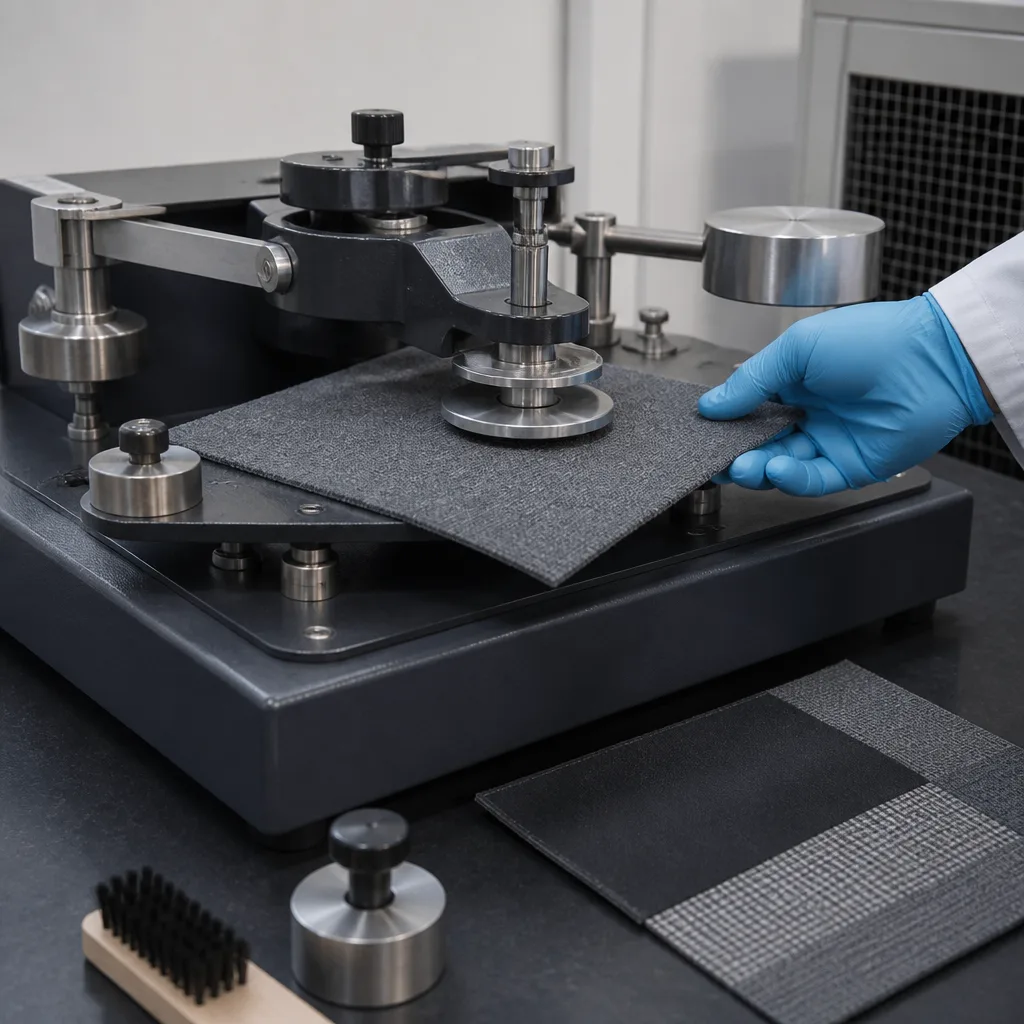
These tests are commonly applied to the following materials:
- Textile upholstery fabrics
- Coated fabrics and vinyl
- Carpets and mats
- Interior trim plastics and painted surfaces
The Ford FLTM BN 108 standard series ensures that the materials used inside vehicles maintain their appearance and function over long-term use. This standard is divided into multiple sub-sections, each targeting a specific type of mechanical damage:
- Ford FLTM BN 108-01 Abrasion Resistance of Textile Fabrics (Inflated Diaphragm Method): This standard defines a test method used to evaluate the abrasion resistance of automotive textile materials such as seat fabrics, upholstery, and trim fabrics. Specifically, it measures how well the fabric withstands mechanical abrasion caused by friction under controlled pressure and movement, simulating real-world in-vehicle use.
The main purpose of this standard is to predict how textile materials will behave during long-term use in a vehicle, especially in areas exposed to the following factors:
- Seat entry and exit friction
- Repeated body contact
- Clothing wear and tear (such as on jeans, zippers)
- Passenger movement over time
This standard ensures that interior fabrics protect against the following:
- Surface integrity
- Appearance quality
- Structural strength
This method simulates a three-dimensional flexing and friction movement that is closer to actual seat use than flat wear tests.
After testing, the material is evaluated according to the following criteria:
- Degree of visual wear
- Fiber damage or breakage
- Surface fuzzing
- Loss of color or texture
- Time elapsed until failure or number of cycles
This method is commonly used for the following:
- Woven upholstery fabrics
- Knitted upholstery textiles
- Coated textiles
- Interior decorative fabrics
- Some composite textile laminates
This standard evaluates the resistance of textile fabrics to abrasive wear under stretching and compression conditions. It simulates real-life friction on upholstery and furniture surfaces.
- Ford FLTM BN 108-02 Wear Resistance (Taber Abrasion Method): This standard defines a test method used to evaluate the wear resistance of automotive materials using the Taber abrasion system. This method is designed to measure how different materials withstand rotational wear caused by abrasive wheels under controlled load conditions.
This method is commonly applied to both interior and exterior materials, such as:
- Textile fabrics
- Coated fabrics
- Genuine Leather
- Plastics
- Painted surfaces
- Mats and rugs
- Rubber and flooring materials
The primary purpose of this standard is to simulate long-term wear and tear caused by the following factors:
- Friction caused by passenger movement.
- Contact with clothing and objects.
- Sliding wear on interior surfaces
- Surface wear in high-contact areas (seats, consoles, upholstery).
This method helps determine whether a material can maintain its appearance and functional surface integrity over time.
After testing, the materials are evaluated according to the following criteria:
- Visual wear and tear (scratches, dulling, loss of coating)
- Mass loss or thickness reduction (if necessary)
- Uncovering the underlying layers
- Discoloration or surface texture degradation
- Number of cycles until failure or specification limit.
Acceptance criteria are generally defined by Ford engineering specifications or supplier agreements.
This standard applies to a wide range of automotive materials:
- Textile upholstery for seats
- Vinyl and coated interior surfaces
- Leather upholstery
- Instrument panel and console plastics
- Mats and rugs
- Painted interior/exterior components
Ford FLTM BN 108-03 Pilling Resistance (Textile Upholstery Materials): This standard defines a test method used to assess the pilling resistance of automotive textile materials, particularly those used in interior upholstery such as seat fabrics and trim. This standard determines how easily a fabric forms lint (small clumps of fiber) when subjected to repeated mechanical friction.
This standard is designed to simulate real-world conditions to which fabrics are exposed, including:
- Constant friction from clothing (especially denim)
- Passenger movement in the seats
- The seat surfaces fold and flex.
- Prolonged mechanical wear in high-contact areas.
The aim is to evaluate whether the material retains a clean and smooth appearance over time.
Pilling refers to small fiber knots that form on the fabric surface due to abrasion. These pillings include:
- It reduces the aesthetic appearance.
- It makes the fabric look old or worn.
- It can affect the perceived quality of the vehicle's interior.
This standard evaluates how resistant a fabric is to this phenomenon.
After the test, the results are typically evaluated using the following methods:
- Visual rating scale (degree of clumping)
- The size and density of the lumps formed
- Fabric pilling and surface roughness.
- Comparison with reference standards or quality cards
Higher resistance means:
- Less clumping
- Cleaner surface
- Better long-term outlook
This standard applies primarily to the following:
Woven upholstery fabrics
- Knitted upholstery textiles
- Textile blends used in automotive interiors.
- Coated or (depending on the intended use) laminated fabrics
Ford FLTM BN 108-04 Wear Resistance (Friction Abrasion Test): This standard defines a test method used to determine the resistance of automotive interior materials to wear and surface friction damage. This method evaluates how materials behave when subjected to frictional contact, shear pressure, and repeated surface friction, which commonly occur in real vehicle use.
This standard applies primarily to the following:
- Painted interior and exterior components
- Vinyl and coated flooring materials
- Genuine Leather
- Trunk mats and interior panels
This testing method is designed to simulate real-life wear conditions such as:
- Shoes rubbing against door thresholds
- Cargo movement in baggage areas
- Contact between clothing and inner panels.
- Sliding objects across surfaces
The goal is to ensure that the materials protect the following:
- Surface appearance
- Color uniformity
- Coating durability
- Resistance to visible friction marks
After testing, the material is evaluated in terms of the following aspects:
- Visible signs of wear or whitening
- Color transfer or fading
- Removal of coating or change in shine
- Surface roughness or deformation
- Damage level compared to acceptable limits.
Results are typically graded visually or using defined Ford rating scales.
This standard is commonly used in the following areas:
- Painted plastic interior parts
- Vinyl surfaces (door panels, instrument panels)
- Leather seats and armrests
- Luggage compartment linings
- Decorative coated panels
Ford FLTM BN 108-07 Resistance of Upholstery Materials to Snap: This standard defines an internal testing method used to assess the snap resistance of automotive textile upholstery materials, such as seat fabrics and interior trim. This method measures how easily fibers or yarns are pulled, snapped, or torn when exposed to a rough or abrasive contact surface.
This method simulates real-world conditions where fabrics can be damaged for the following reasons:
- Jewelry, zippers, or sharp clothing edges.
- Cargo contact in seating and luggage areas
- Repeated passenger entry/exit
- Hard use during vehicle operation
The aim is to ensure the fabric remains clean, with a sound surface, free from pulled threads or loops.
After testing, the material is evaluated according to the following criteria:
- Number of tears or ruptures
- Severity of fiber damage
- Changes in surface appearance
- Yarn deformation or loop formation
- Visual evaluation according to reference standards.
Less tearing means better durability and higher quality performance.
This standard is primarily used in the following areas:
- Woven upholstery fabrics
- Knitted upholstery textiles
- Decorative interior furnishings
- Technical textile blends used in automotive interiors.
This is especially important for fabrics with looped or textured surfaces, which are more prone to tearing.
- Ford FLTM BN 108-10 Crockmeter abrasion test: This standard defines an internal testing method used to determine the resistance of automotive interior trim materials to abrasion and friction damage using a Crockmeter device. This test simulates real-life wear conditions in vehicle interiors, evaluating how interior surfaces withstand repeated frictional contact under controlled pressure and movement.
This method is mainly applied to the following:
- Textile upholstery fabrics
- Coated fabrics and vinyl
- Leather surfaces
- Interior trim panels and decorative materials
This testing method is designed to simulate everyday friction situations such as:
- Clothes rubbing against the seats
- Shoes touching door panels
- Repeated passenger entry and exit
- Slightly sliding contact between the inner surfaces.
The goal is to ensure that the materials protect the following:
- Surface appearance
- Color uniformity
- Resistance to visible signs of wear.
- Functional durability of coatings or surface treatments
After testing, the materials are evaluated in the following aspects:
- No visible scratches or whitening.
- Color transfer (especially in dyed fabrics)
- Coating damage or surface deterioration
- Change in brightness or texture
- Wear level according to reference standards
Results are generally rated using visual rating scales defined by Ford or using comparative samples.
This standard is commonly used in the following areas:
- Automotive seat textiles
- Leather upholstery
- Vinyl and coated interior surfaces
- Soft-touch upholstery components
- Decorative panels and armrests
This is especially important for colored fabrics and coated surfaces where visible scratches are critical.
- Ford FLTM BN 108-13 Scratch Resistance (Scratch/Abrasion Test): This standard defines a test method used to evaluate the scratch resistance of automotive interior and exterior surfaces, particularly plastics, coated materials, and upholstery components. This method determines how a material responds to controlled scratching forces that simulate real-world damage, such as from keys, fingernails, tools, or abrasive contact.
This method is commonly used in automotive material qualification programs in the following areas:
- Interior upholstery plastics
- Painted surfaces
- Coated components
- Soft-touch and decorative surfaces.
- Polymer-based outer parts
This standard is designed to simulate common scratch-causing scenarios encountered in vehicle use. For example,
- Contact with keys, rings, or metal objects.
- Load movement in internal compartments
- Cleaning or wiping with abrasive contact.
- Accidental scratches during passenger use.
The goal is to ensure that the materials protect the following:
- Surface integrity
- Aesthetic look
- Coating durability
- Resistance to visible permanent damage.
After the test, the results are evaluated as follows:
- Initial apparent scratch load (critical load)
- Scratch depth or severity
- Surface whitening or the onset of whitening (for plastics)
- Coating failure or separation
- Permanent groove formation
This standard generally applies to the following:
- Automotive interior plastics (ABS, PP, PC blends)
- Painted trim components
- Soft-touch coated surfaces
- Exterior decorative plastics
- Control panels and console materials
Ford FLTM BN 108-14 Abrasion Resistance of Leather Top Coatings: This standard defines an internal testing method used to evaluate the durability of leather top coatings under conditions of mechanical abrasion. This method measures how well the protective surface coating (top coating) on automotive leather resists wear, tear, and deterioration during actual vehicle use.
This method is specifically focused on leather applications that are subject to high abrasion. For example,
- Seat surfaces
- Armrests
- Steering wheel leather covers
- Door panel leather inserts
This method is designed to simulate situations where the skin is exposed to prolonged, real-world conditions:
- Repeated sitting friction
- Clothing wear (especially jeans)
- Hand contact and grip wear
- Sliding and movement on the seat surfaces.
The goal is to ensure the skin protects the following:
- Surface coating integrity
- Appearance quality
- Color homogeneity
- Resistance to premature wear
This test focuses primarily on the outer coating layer of the leather, not the raw leather itself. It evaluates the following:
- Abrasion resistance of the top coating
- Adhesion to the subcutaneous layer
- Change in surface gloss
- Visible wear patterns (polishing, thinning, or exposure of the substrate)
- Premature degradation of protective coatings
After the test, the results are evaluated according to the following:
- Degree of wear or removal of the top coating
- Exposure of the underlying skin
- Changes in surface appearance (gloss, color, texture)
- Formation of bright or bald spots
- Cycles up to failure or threshold wear point
Performance is generally rated using Ford's internal acceptance limits.
This standard applies primarily to the following:
- Pigmented automotive leathers
- Coated leather upholstery
- Premium upholstery materials
- Steering wheel leather covers
- Wear-resistant interior leather upholstery.
For many years, our organization, with its competent and experienced team, has been understanding the needs of its customers, providing the advanced testing services they require, and assisting them in the establishment, implementation, and improvement of management systems. Within this framework, we also provide testing services in accordance with Ford FL™ BN 108 standards.



