

The “Fiat MS-90095 Determination of the Fire Resistance of Nonmetallic Materials in Vehicle Passenger Compartment Parts” standard, developed by Fiat Chrysler Automobiles (FCA) (now Stellantis), an Italian-American automotive company, is an internal automotive material and safety specification developed within the FCA engineering standards system to evaluate the fire resistance (flammability) of nonmetallic materials used in vehicles. This standard is widely referenced in FCA material specifications for plastics, elastomers, PVC coatings, interior components, and polymer blends.
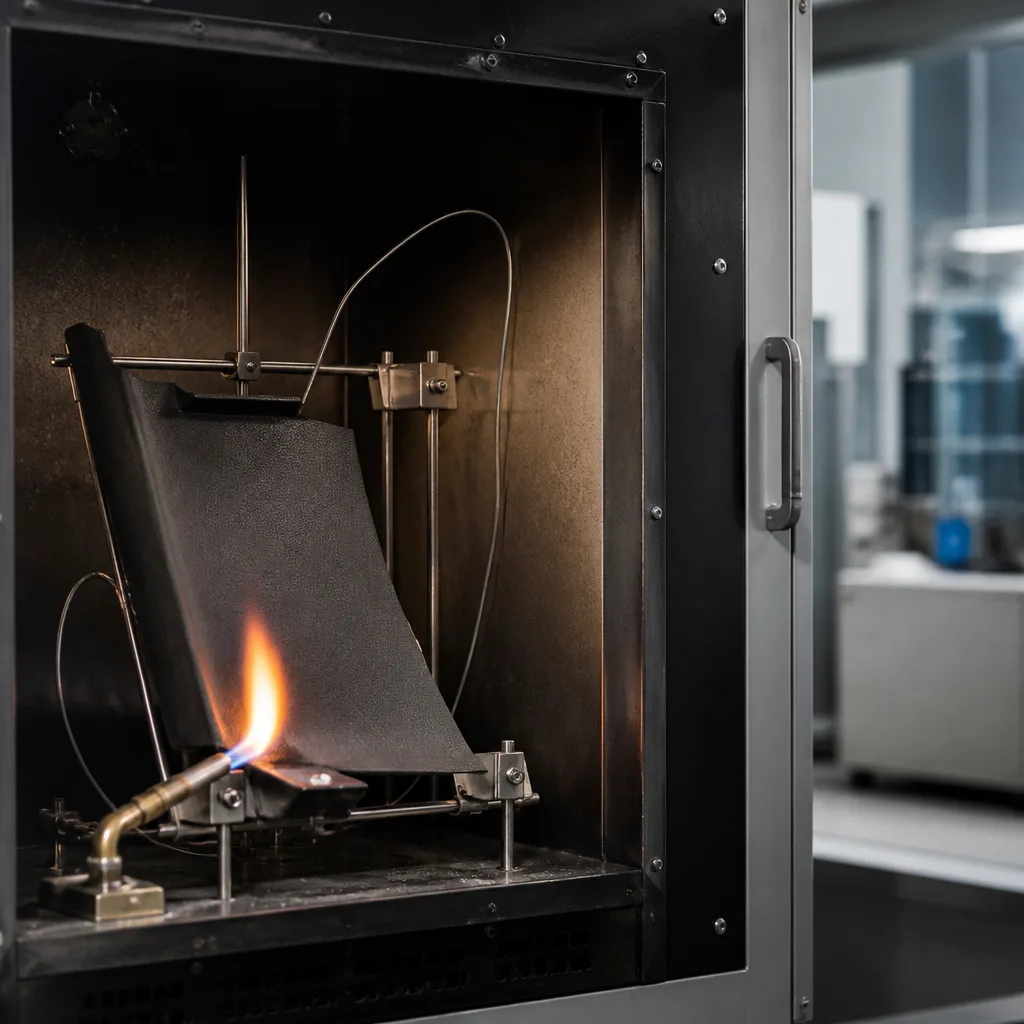
This standard specifically defines the requirements for how materials behave when exposed to flame or high heat conditions inside or around a vehicle.
The primary objective of the Fiat MS-90095 standard is to ensure that internal and external non-metallic components meet the following requirements:
This specification is particularly important for the following:
Many FCA material standards explicitly state that the material must meet the vehicle interior combustion resistance requirement according to the MS-90095 standard.
The Fiat MS-90095 standard is not typically a standalone material description standard. Instead, it is often referred to in conjunction with other FCA specifications such as the following:
The Fiat MS-90095 standard typically evaluates the following:
Various automotive polymers and upholstery materials are referenced under this standard. Materials typically evaluated under the Fiat MS-90095 standard include:
In particular, polycarbonate/acrylonitrile butadiene styrene blends and polyoxymethylene materials must comply with the Fiat MS-90095 standard combustion requirements before being approved for vehicle use.
The Fiat MS-90095 standard is conceptually compatible with internationally accepted flammability standards such as:
In some FCA documents, older Fiat combustion specifications have been later harmonized or modified with ISO-based methods, but the Fiat MS-90095 standard is still referenced as the current internal requirement.
Tests related to the Fiat MS-90095 standard generally include the following:
Materials that fail to achieve the required combustion rate or continue to burn excessively are generally rejected for use in vehicles.
The Fiat MS-90095 standard defines two different flammability test procedures, Method A and Method B, used for different vehicle material applications:
Method A is typically compared to the following standards:
When this method is applied,
The material passes the test under the following conditions:
This method is commonly used for the following:
Method B is generally considered a more rigorous burn assessment method and is used in the following areas:
This method includes the following:
The main purpose of this method is as follows:
The main difference between these two methods is the intensity and direction of the flame test:
Method A focuses primarily on limiting flame spread within the chamber, while Method B focuses more on preventing sustained combustion in harsher thermal environments.
The Fiat MS-90095 standard is necessary because modern vehicles contain large amounts of polymer-based materials. Without combustion control standards,
Therefore, this standard directly contributes to the following:
In conclusion, the Fiat MS-90095 standard is a critical FCA automotive flammability specification focusing on the combustion resistance of non-metallic vehicle materials. This standard serves as a crucial safety benchmark for plastics, elastomers, upholstery systems, and interior components used in FCA vehicle platforms. By controlling flame spread and fire behavior, it helps improve passenger safety, regulatory compliance, and material durability in automotive applications.
For many years, our organization, with its competent and experienced staff, has been understanding the needs of its customers, providing the advanced testing services they require, and assisting them in the establishment, implementation, and improvement of management systems. Within this framework, we also provide testing services in accordance with the Fiat MS-90095 standard.
To get an appointment, to get more detailed information or to request an evaluation, you can ask us to fill in our form and reach you.

