

The standard “BMW AA-0081 Determination of the cleavage plane of multilayer coatings using single-impact test”, developed by BMW, a multinational vehicle manufacturer, describes a test method aimed at clearly determining the cleavage plane(s) in multilayer coatings using a single-impact stress method.
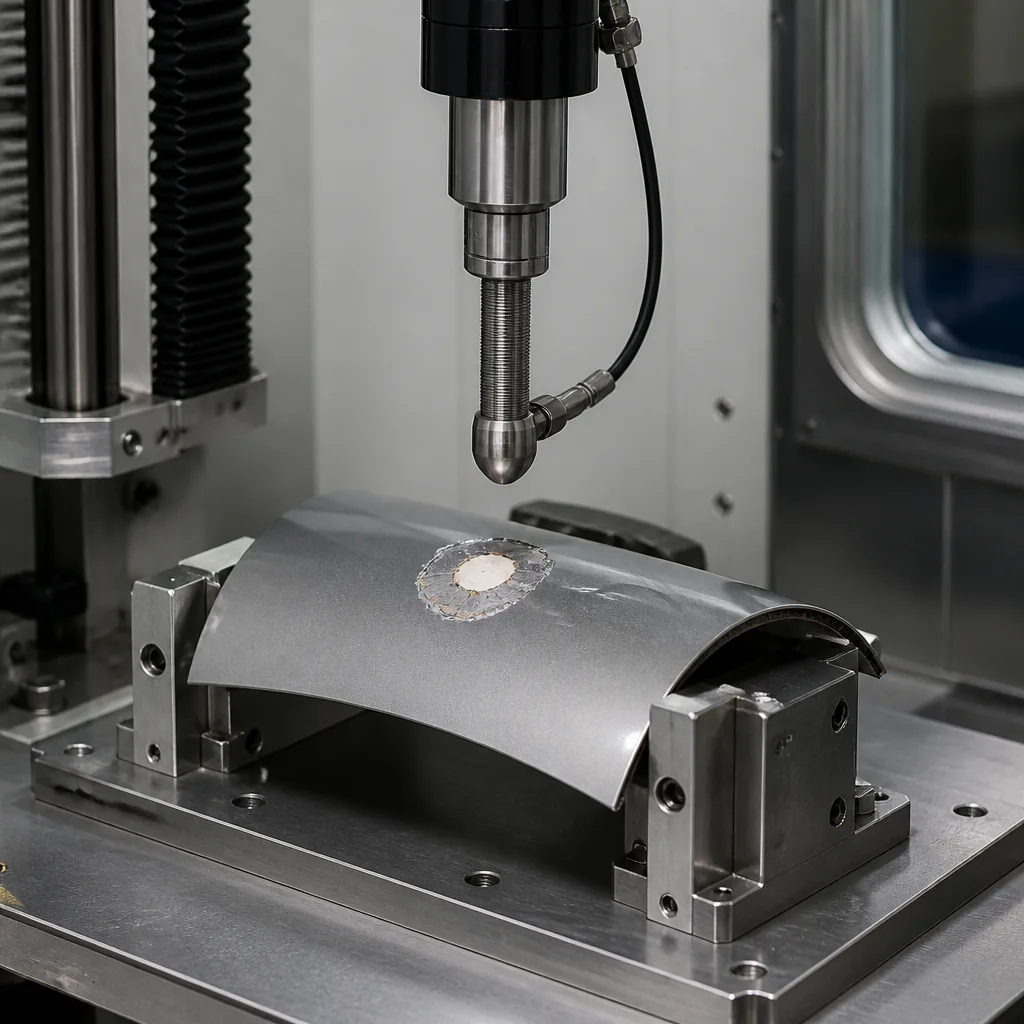
The BMW AA-0081 standard is a specific laboratory test specification used to determine layer separation (layer dehiscence) in multi-layer automotive paint systems after a single controlled impact. This method is designed to evaluate the adhesion and mechanical integrity of automotive coating systems when subjected to impacts similar to stone chips.
Modern automotive paint systems consist of several layers that work together to protect the vehicle body from corrosion, weathering, chemicals, and mechanical damage. When a stone strikes the painted surface at high speed, the coating can deteriorate by separating between individual layers instead of simply scratching the surface. The BMW AA-0081 standard helps engineers determine exactly where this separation occurs, providing valuable information for improving coating durability and long-term corrosion resistance.
The primary objectives of the BMW AA-0081 standard are as follows:
Unlike traditional stone chip tests, which primarily measure the amount of visible damage, the BMW AA-0081 standard focuses on determining which coating layer lost its adhesion first.
A typical automotive paint system consists of several functional layers:
Each layer performs a specific function, but overall durability largely depends on the strength of the interfaces between these layers. If the adhesion of an interface is weak, an impact can cause separation, exposing the substrates or even the metal substrate to corrosion. Single-impact testing provides a controlled method to reproduce this type of damage under laboratory conditions.
The BMW AA-0081 standard subjects a coated test panel to a single controlled impact using a standardized impact object or projectile. Following the impact,
The goal is not only to determine if damage has occurred, but also to understand the mechanism of the failure.
A typical test setup includes:
Some laboratories also use the following for detailed failure analysis:
In general, the testing method follows these steps:
The analysis generally focuses on the following:
The separation point provides crucial information about the weakest interface in the coating system.
Typical failure modes include:
Understanding these failure modes helps coatings engineers optimize material formulations and application processes.
Single-impact testing offers several advantages over multi-impact stone-crushing methods:
These features make the method particularly useful during automotive paint development and validation.
There are many variables that can affect coating performance. These include:
Manufacturers carefully monitor these variables to ensure consistent results.
The BMW AA-0081 standard generally applies in the following situations:
The BMW AA-0081 standard is a procedure specific to original equipment manufacturers, but technically it is related to the “ISO 20567 Paints and varnishes – Determination of stone chip resistance of coatings” standard series. The distinguishing feature of this standard is that it focuses on determining the separation layer in multi-layer coating systems, rather than simply measuring visible paint damage.
The BMW AA-0081 standard offers several advantages:
The method described is valuable in the following sectors:
In conclusion, the BMW AA-0081 standard is a crucial laboratory procedure for evaluating the durability of multi-coat automotive paint systems under controlled impact conditions. Instead of simply measuring the extent of paint damage, it identifies the exact coating interface where separation begins, enabling engineers to diagnose weaknesses in coating adhesion and optimize paint formulations.
The BMW AA-0081 standard supports the development of more impact-resistant coatings, contributing to improved vehicle appearance, enhanced corrosion protection, extended service life, and higher overall product quality.
For many years, our organization, with its competent and experienced staff, has been understanding the needs of its customers, providing the advanced testing services they require, and assisting them in the establishment, implementation, and improvement of management systems. Within this framework, we also provide testing services in accordance with the BMW AA-0081 standard.
To get an appointment, to get more detailed information or to request an evaluation, you can ask us to fill in our form and reach you.

