

The standard “BMW PR 308.1 Climatic testing of adhesive joints”, developed by BMW, a multinational vehicle manufacturer headquartered in Germany, describes a climatic test method for determining the strength of adhesive joints in equipment parts.
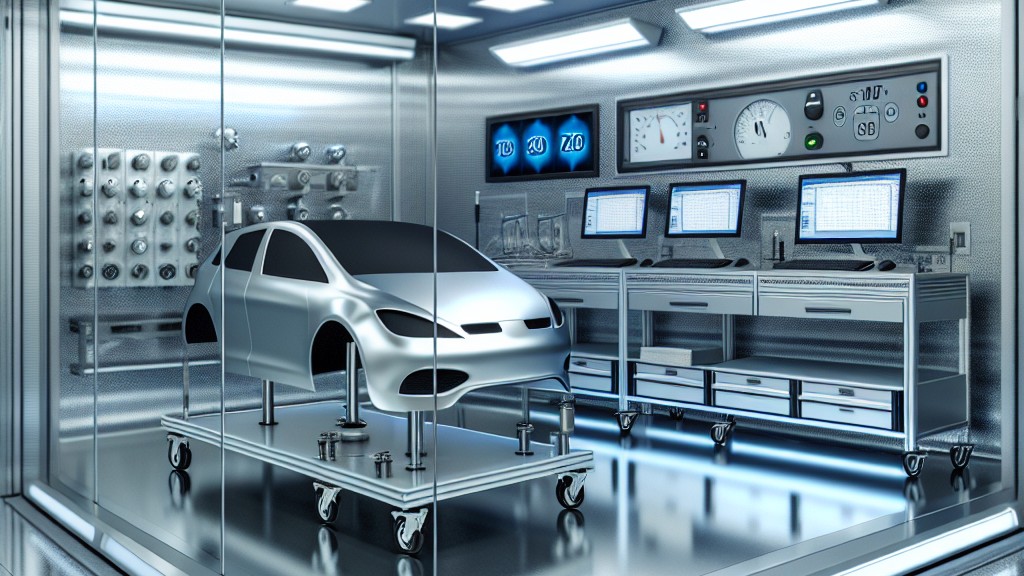
This standard covers a climatic test for adhesive joints in trim parts and composite materials. This method is used to evaluate adhesive bonds against climatic environmental influences, typically involving high humidity. This test method involves aging test specimens through varying temperature and humidity cycles to ensure that adhesive bonds maintain their quality and adhesive strength under realistic conditions.
The application of adhesively bonded joints in the automotive industry has increased significantly in recent years, particularly due to the potential for lighter vehicles, fuel savings and reduced emissions. The main benefits of this method are design flexibility and the ability to join different and new materials, among others. On the other hand, the use of lightweight materials such as high-strength steel, aluminum alloys and composites in automotive body components has also increased steadily in order to achieve lower vehicle mass.
Factors such as overlap length and adhesive hardness that affect the strength of multi-material adhesive joints are important.
The increasing demand for energy-efficient vehicles has led manufacturers to increase the use of lightweight materials such as high-strength steel, magnesium alloys, aluminum alloys, and composites when making automotive body components to achieve lower vehicle mass. In addition, combinations of different materials provide greater design flexibility.
Adhesive bonding can be used to join almost any material and material combination and is increasingly used in the automotive industry. However, joining dissimilar materials presents significant challenges to the body car assembly process. Therefore, adequate testing of the behavior of multi-material adhesively bonded joints is necessary to ensure the efficiency, safety and reliability of such joints.
There is a growing trend today to optimize the strength, weight, and durability of automotive structures by combining traditional metals with polymeric composites. For example, composites are structurally more efficient than metals and are not subject to galvanic corrosion, while metals have better damage tolerance and failure predictability than composites and are not affected by solvents and temperatures that tend to degrade polymers. Therefore, multi-material joints between metals and composites are increasingly being developed to optimize the benefits of both types of materials.
In advanced laboratories, the effect of different material combinations on the strength of different multi-material bonded joints is investigated experimentally, analytically and numerically. For example, it is known that flexible adhesives increase the resistance to crack growth and thus increase the strength of the joints. The joint strength varies depending on the selected bonded joint combinations. The best results have been obtained in aluminum-aluminum joints.
The bond strengths of the tested joints are lower than the strength of metal-to-metal bonded joints. Furthermore, a limiting value of overlap length (30 mm) was found at which the joint strength is practically constant due to the limited ductility of the adhesive. Recent studies have found a significant decrease in joint strength at elevated temperatures.
Overlap length is another parameter that can affect the strength of a joint. Unlike joint width, which increases strength proportionally, the effect of overlap length depends on the type of adhesive (i.e., ductile or brittle) and the type of substrate to be bonded. Unlike brittle adhesive joints, the strength of ductile adhesive joints has been shown to increase almost proportionally with increasing overlap length.
Our organization has a strong staff that closely follows the developments in science and technology in the world and constantly improves itself. Among the numerous test, measurement, analysis and evaluation studies provided for businesses in various sectors, there are also test services in accordance with the "BMW PR 308.1 Climate test of adhesive joints" standard.
To get an appointment, to get more detailed information or to request an evaluation, you can ask us to fill in our form and reach you.

