

Developed by Fiat Chrysler Automobiles (FCA) (now Stellantis), an Italian-American automotive company, the “Fiat 50473-01 Method for Determining the Resistance of Products to Chemical Substances” standard is an automotive materials and coatings testing standard used to evaluate the resistance of painted, coated, electroplated, and decorative automotive components to aggressive chemicals encountered during vehicle use and maintenance. This standard is widely referenced in supplier qualification systems.
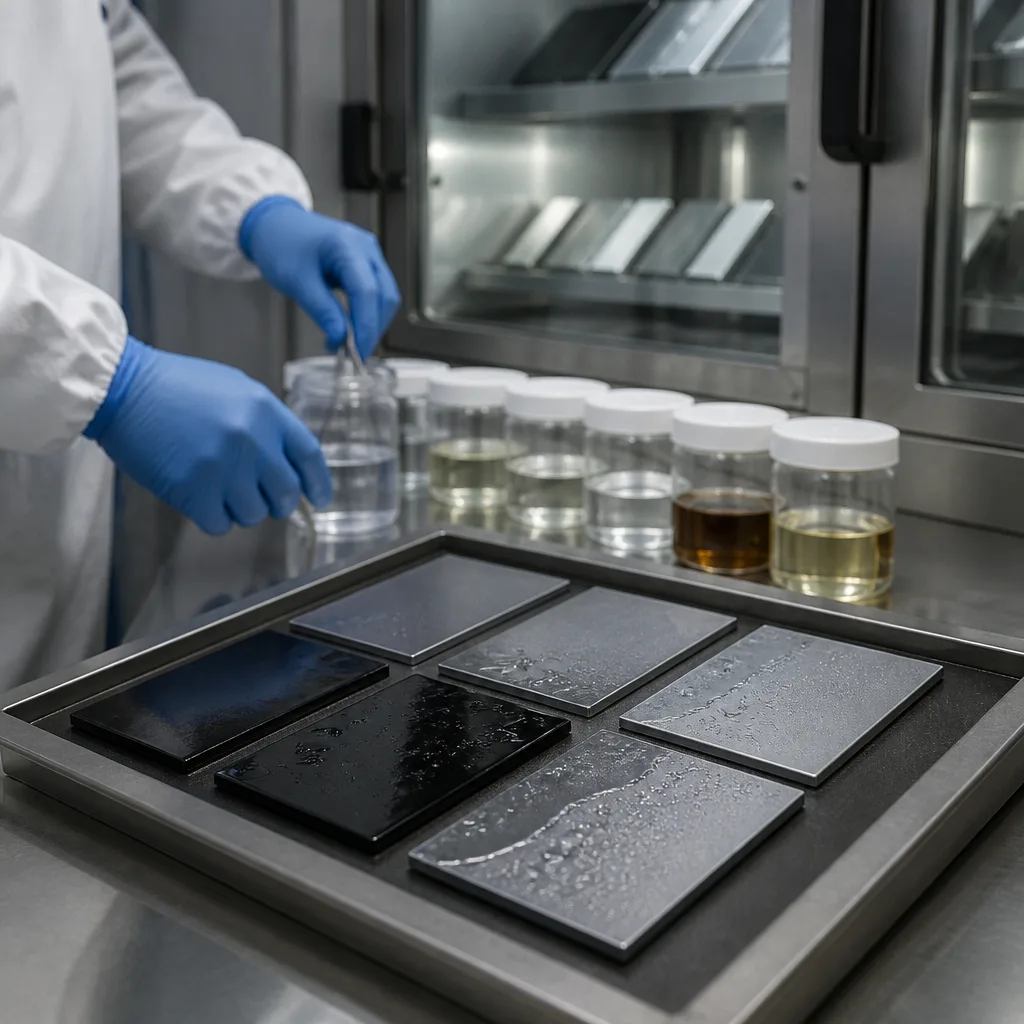
The primary purpose of this standard is to verify that exposed automotive surfaces, after contact with automotive chemicals, are protected against the following:
This standard is particularly important for:
Automotive parts are routinely exposed to the following chemicals:
The Fiat 50473-01 standard ensures that these substances do not damage the component throughout its service life. This standard applies to:
This standard is frequently referenced along with the following:
The Fiat 50473-01 standard includes various methods for evaluating resistance to different chemical substances:
This method simulates real-world exposure conditions that may result from:
The aim is to determine whether the coating system can protect the following:
Sulfuric acid is highly aggressive towards many automotive coatings. Even short-term exposure can cause:
This method verifies that the coating system provides sufficient resistance to these effects. This test involves exposing or applying the sample to a sulfuric acid solution under controlled laboratory conditions. The coated surface is then evaluated for signs of chemical attack. The test replicates, in an accelerated manner, long-term environmental acid exposure.
Sulfuric acid resistance is important because vehicles are regularly exposed to acidic contaminants during normal operation. Environmental sulfur compounds combine with moisture to form acidic deposits that can damage coatings over time. This test supports long-term durability, environmental resistance, coating validation, and supplier quality approval.
This test is particularly important because modern windshield washer fluids may contain the following:
These chemicals can gradually damage sensitive coatings and painted surfaces.
The aim of this method is to verify that coatings retain the following properties after exposure to washing fluids commonly used in automotive service environments:
This method helps ensure that the washing liquid does not cause the following:
This test involves exposing the surface to a controlled amount of windshield washer fluid under specific environmental conditions. The exposure simulates prolonged field contact between the washing chemicals and automotive paints. Following the exposure, the surface is examined for any permanent physical or cosmetic damage.
Mineral oils can penetrate or chemically affect coating systems, especially the following:
The aim of this method is to verify that the coating retains the following after oil exposure:
This method helps determine whether the coating is resistant to:
This test consists of exposing the sample to a specific mineral oil or lubricant under controlled laboratory conditions. After exposure, the surface is examined to determine whether the chemical interaction has damaged the material or coating system. This method accelerates the effects of long-term oil contamination encountered in real vehicle environments.
For many years, our organization, with its competent and experienced staff, has been understanding the needs of its customers, providing the advanced testing services they require, and assisting them in the establishment, implementation, and improvement of management systems. Within this framework, we also provide testing services in accordance with the Fiat 50473-01 standard.
To get an appointment, to get more detailed information or to request an evaluation, you can ask us to fill in our form and reach you.

