

Daimler A21.10.01 Floor Covering / Function, § 4.6 Foot Resistance
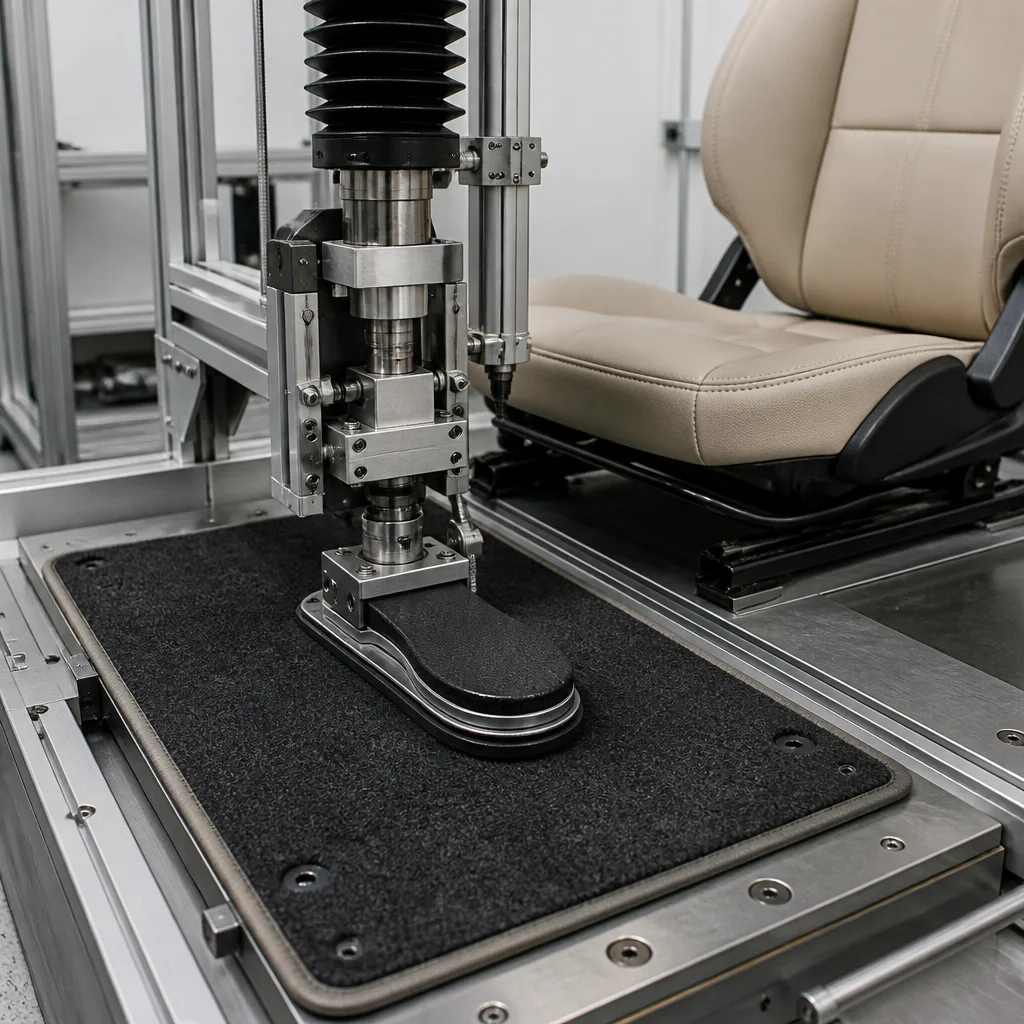
The “Daimler A21.10.01 Standard functional test program - Floor covering / Function, § 4.6 Foot resistance” standard, developed by the Daimler-Benz automotive company, includes an original equipment manufacturer automotive floor covering durability test. This test typically evaluates the following in automotive flooring systems:
Typical automotive wear resistance tests generally include the following:
Relevant automotive interior durability standards typically utilize the following:
The purpose of the Daimler A21.10.01 standard is to evaluate the resistance of automotive floor covering systems to repeated passenger foot traffic and high heel loads. This test verifies the following:
The products for which it is applicable are:
During testing, a specific foot or heel geometry is repeatedly loaded into a ground sample under controlled force and frequency to simulate prolonged entry/exit and pedal range usage. Visual damage is then assessed, permanent deformation is measured, and functional failure is checked.
This procedure describes a laboratory method for evaluating the wear resistance and long-term durability of automotive upholstery systems subjected to repeated foot loads. The method simulates passenger entry and exit, heel load, and localized foot traffic throughout the vehicle's lifespan.
This test determines the resistance of flooring materials to the following:
For the purposes of this standard, the following definitions apply:
The mechanical cycling device used in the tests includes the following:
The standard sample size is 300 mm x 300 mm. Alternative sizes are permitted upon approval. Three samples are used per material variant in the tests. Samples are conditioned for a minimum of 24 hours at a temperature of 23 degrees plus/minus 2 degrees and a relative humidity of 50 percent plus/minus 5 percent.
The nominal load applied in the tests is 500 N plus/minus 25 N. Alternating loads may be specified in the engineering approval documents. The test frequency is 1,5 Hz plus/minus 0,2 Hz. The standard durability requirement is 50.000 cycles.
Visual evaluation is performed under standard laboratory lighting, and fiber abrasion, changes in surface gloss, loss of relief, cracks, foam collapse, layer separation, discoloration, and surface tearing are assessed. The final thickness obtained after a 30-minute recovery period is measured.
Compressive permanent deformation is calculated according to the formula given in the standard.
During manual peeling, the absence of separation, bulging, or rupture of the supporting layer should be observed.
The admission criteria are as follows:
The fault classification is as follows:
The test report to be prepared should include: material description, sample dimensions, conditioning parameters, load, frequency, number of cycles, environmental conditions, measured thickness values, compression permanent deformation calculation, before and after photographs, failure observations, and pass/fail evaluation.
Automotive upholstery is not merely a cosmetic surface, but a structural upholstery component with a long service life, therefore an abrasion resistance standard is necessary. In vehicle use, upholstery is subjected to thousands of intense heel impacts, torsional movements, dirt abrasion, moisture, and thermal aging over the vehicle's lifespan. Original equipment manufacturers use durability, appearance, safety, and perceived vehicle quality tests to ensure the upholstery system maintains these aspects.
This standard is considered important for the following reasons:
General international standards often do not reflect vehicle-specific installation, do not include original equipment manufacturer appearance expectations, and do not cover premium brand acceptance criteria. Therefore, original equipment manufacturer standards stand out. Such standards customize the following:
For many years, our organization, with its competent and experienced team, has been understanding the needs of its clients, providing the advanced testing services they require, and assisting them in the establishment, implementation, and improvement of management systems. Within this framework, we also provide testing services compliant with the Daimler A21.10.01 standard.
To get an appointment, to get more detailed information or to request an evaluation, you can ask us to fill in our form and reach you.

