

The “GMW 15377 Staining and Cleaning of Leather and Plastic Roll Goods” standard, developed by General Motors Worldwide (GMW), is designed to assess how susceptible leather, coated textiles, plastic roll goods, and related interior materials are to staining and how effectively those stains can be removed through cleaning. The described test method is particularly relevant to automotive interior materials because surfaces such as seats, door panels, armrests, consoles, and other trim components are routinely exposed to dirt, clothing dyes, food, beverages, oils, and other contaminants.
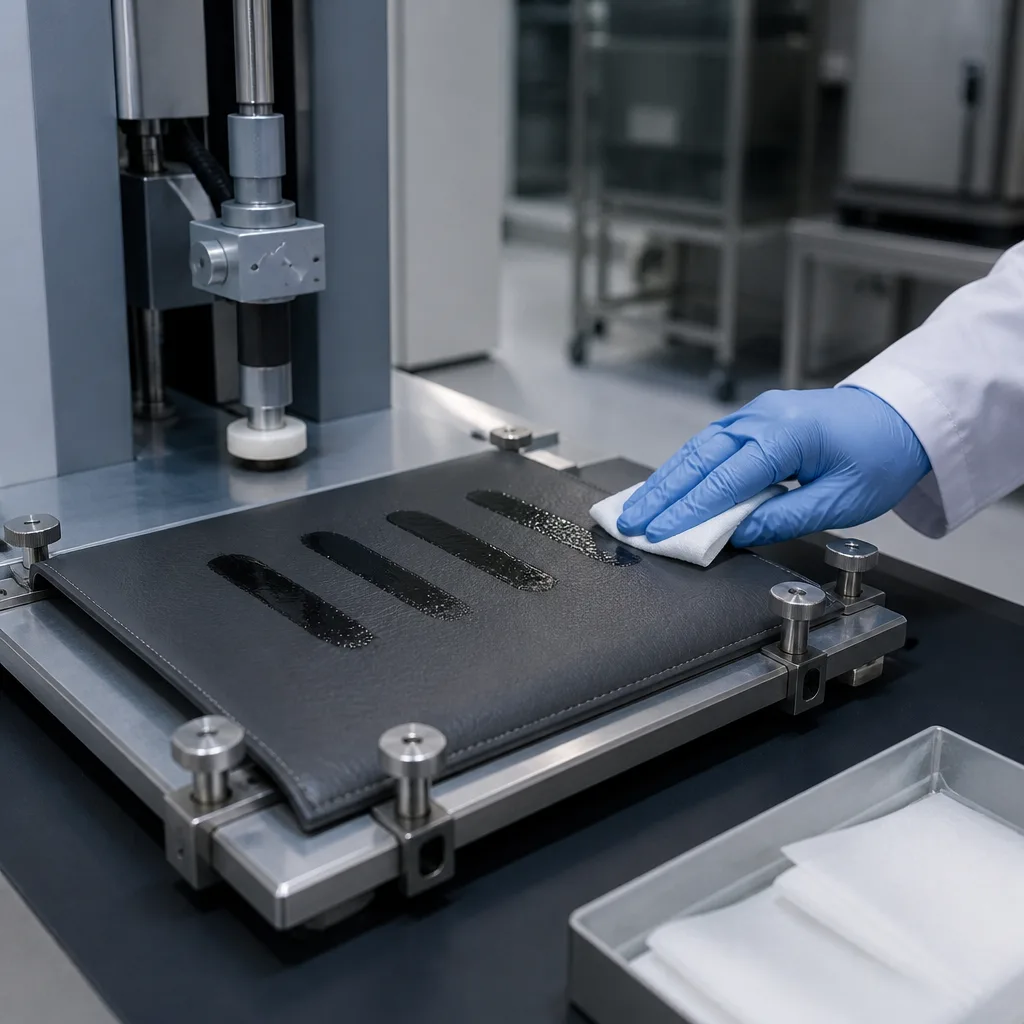
The primary purpose of the GMW 15377 standard is to define two important characteristics:
A material that initially looks attractive but permanently retains general stains may not be suitable for automotive interiors. Therefore, stain resistance and cleanability are important components of interior material quality assessment.
The GMW 15377 standard is applicable to various types of materials used in vehicle interiors, including:
Testing laboratories list the GMW 15377 standard specifically among methods for leather, coated textiles, plastic roll products, and plastics/elastomers/films.
The general concept of the test is simple. A selected contaminant is applied to the surface of a prepared sample under controlled conditions. After the specified exposure time, the sample is evaluated for staining. The stained sample is then subjected to the prescribed cleaning procedure. After cleaning, the surface is examined again to determine the following:
This method is associated with Martindale type testing equipment in laboratory applications. The GMW 15377 standard is among the standards supported by Martindale testing equipment.
The final assessment typically focuses on the visual condition of the material after painting and cleaning. Depending on the requirements applicable to the material or vehicle program, the assessment may consider the degree of remaining staining and any undesirable changes caused by cleaning. A material that performs well should demonstrate the following:
Therefore, the aim is not only to determine whether a material will stain or not, but also whether it can regain its original appearance after realistic cleaning.
Automotive interiors must maintain their appearance throughout the vehicle's service life. Materials are repeatedly exposed to passengers, clothing, footwear, food, beverages, dust, oils, and other sources of contamination. The GMW 15377 standard helps manufacturers and suppliers compare materials prior to production. For example, two synthetic leather materials may have similar color, sheen, softness, and mechanical properties, but one may hold stains significantly more strongly than the other. This makes this standard useful for:
GMW 15377 standard is listed as General Motors' internal materials standard by automotive testing laboratories.
The GMW 15377 standard is important because appearance durability is a functional requirement for automotive interiors. A vehicle's interior may remain mechanically sound, but become unacceptable to customers due to staining or poor cleanability. For example, a seat material may exhibit excellent abrasion resistance but permanently retain dark stains from clothing or food. Conversely, a material may be easy to clean, but may be damaged, discolored, or noticeably altered by repeated cleaning. Therefore, the GMW 15377 standard complements other interior material testing by addressing the specific combination of soiling/staining and cleanability performance.
GMW 15377 standard should not be confused with abrasion or general chemical resistance tests. This standard focuses specifically on staining and cleaning behavior.
Other General Motors standards focus on different properties. For example, the GMW 14688 standard addresses scratch and abrasion resistance, while the GMW 14864 standard evaluates staining of upholstery materials caused by sulfur dioxide and hydrogen sulfide. As a result, a complete material validation program may require several different tests instead of relying solely on the GMW 15377 standard.
Typical applications of this standard in the automotive industry include:
This method can be particularly useful for materials where appearance is a significant part of the quality perceived by the customer.
In summary, the GMW 15377 standard is an automotive interior material test used to evaluate the staining behavior of materials and their ability to be cleaned after soiling. This standard applies to leather, coated textiles, plastic roll products, and related polymeric materials.
This standard evaluates both stain resistance and cleanability properties, helping General Motors and its suppliers select interior materials that maintain an acceptable appearance in daily vehicle use. Therefore, this standard is a crucial part of the broader validation process for durable and aesthetically pleasing automotive interiors.
For many years, our organization, with its competent and experienced staff, has been understanding the needs of its clients, providing the advanced testing services they require, and assisting them in the establishment, implementation, and improvement of management systems. Within this framework, we also provide testing services in accordance with the GMW 15377 standard.
To get an appointment, to get more detailed information or to request an evaluation, you can ask us to fill in our form and reach you.

