

The Canadian motor vehicle safety standard, CMVSS 302, is the Canadian equivalent of the US Federal motor vehicle safety standard, FMVSS 302. This standard regulates the flammability (resistance to fire) of materials used in the passenger compartments of motor vehicles. It plays a critical role in vehicle safety, particularly by helping to reduce the risk of death and injury from fires that start inside the vehicle (e.g., from cigarettes, matches, or other small ignition sources).
The primary purpose of the CMVSS 302 standard is to limit the spread of flames during a vehicle fire, giving occupants more time to escape and reducing the severity of burn injuries. This standard applies to:
This standard covers any material (or composite material) within approximately 13 mm of the passenger compartment air gap. Common examples include:
When tested, materials must meet rigorous combustion resistance criteria. The basic performance requirement is as follows:
These boundaries ensure slow flame spread, minimizing rapid fire spread in enclosed vehicle interiors.
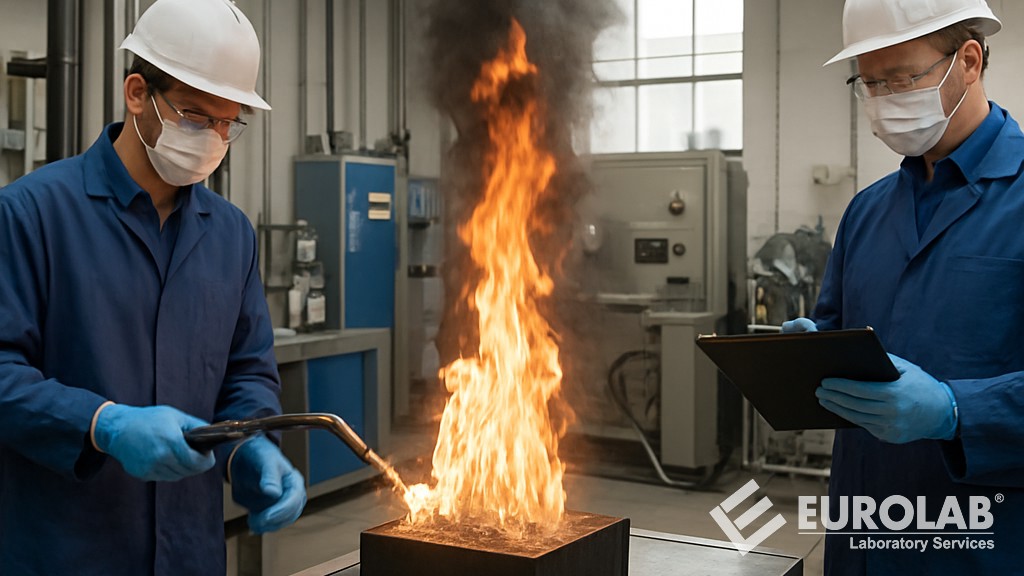
This test method is a horizontal flammability test (closely compliant with international equivalents such as ISO 3795, SAE J369 and ASTM D5132):
The CMVSS 302 standard is technically the same as FMVSS. This harmonization simplifies compliance for manufacturers selling vehicles in both Canada and the United States.
Since its adoption, this standard has been a cornerstone of interior material selection and design. Vehicle manufacturers and suppliers must certify that all relevant interior components conform to the CMVSS 302 standard in order to obtain compliance certification for sale in Canada. Non-compliance may prevent the importation or sale of vehicles in Canada. Tests are performed and documented by accredited laboratories.
This standard remains relevant today, as a wide variety of textiles, foams, plastics, and composite materials continue to be used in vehicle interiors, where fire safety is of paramount importance.
The CMVSS 302 standard primarily aims to reduce deaths and injuries from vehicle interior fires, particularly those that start or spread in the passenger compartment. This standard specifies the maximum flame spread rate for interior materials, ensuring they burn slowly enough to give people more time to escape or be rescued.
The key safety benefits of this standard are as follows:
Although the CMVSS 302 standard has contributed to safer interiors (thanks to better materials and design, interior fires now represent a much smaller percentage of total vehicle fires), vehicle fires remain a general concern, causing hundreds of deaths and injuries each year. Most modern fires are caused by mechanical/electrical malfunctions, accidents, or external sources rather than cigarette smoke, and once a fire enters the cabin, its spread can still be high even with compliance with the CMVSS 302 standard.
This standard remains a fundamental requirement for manufacturers and ensures consistent minimum fire resistance in all vehicles sold in Canada and compliant markets. It also prevents the use of highly flammable materials.
For many years, our organization, with its competent and experienced staff, has been understanding the needs of its clients, providing the advanced testing services they require, and assisting in the establishment, implementation, and improvement of management systems. Within this framework, we also provide testing services in accordance with the "CMVSS 302 Flammability of indoor materials - Overview" standard.
To get an appointment, to get more detailed information or to request an evaluation, you can ask us to fill in our form and reach you.

