Toyota TSF7201G-1 Sun Visor Impact Test Criteria
The standard “Toyota TSF7201G-1 Sun visor impact test criteria” developed by Toyota automobile company describes the criteria for sun visors subjected to impact tests within the scope of this standard. This standard is applicable to the following vehicle types:
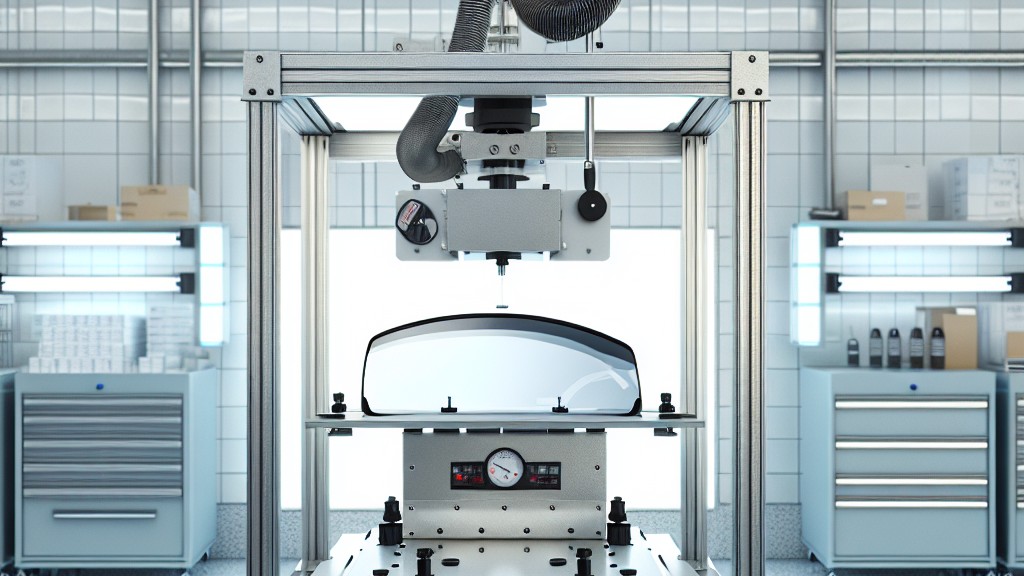
- Under the Toyota FMVSS 201 standard, passenger cars are multi-purpose vehicles, buses, and trucks with a GVWR of 4536 pounds (10 kg) or less (multi-purpose vehicles are cars designed to carry XNUMX or fewer passengers, with a truck chassis, or special equipment for off-road driving). Meanwhile, the gross vehicle weight rating (GVWR) includes payload capacity, which is the maximum weight a truck can safely carry.
- Passenger cars, passenger car derivatives, multi-purpose vehicles and all other vehicles with a GVWR of 11 kg or less within the scope of ADR 4500 (passenger car derivatives are pick-up type vehicles or panel vans of the same model as the passenger car equivalent)
- Passenger cars under ECE 21 and 78/632/EEC
- Safety regulations for road vehicles in Japan, all vehicles covered by article 45
The evaluation criteria are according to the table given in the standard. As follows:
- Hard material:
- According to FMVSS 201 standard, the radius of curvature is at least 3,2 mm
- According to ADR 11 standard, the radius of curvature is at least 3,0 mm
- According to the European Union ECE 21 and 78/632/EEC regulations and Japan's road vehicle safety regulations, article 45, the radius of curvature is at least 3,2 mm.
- Sun visor:
- According to FMVSS 201 and ADR 11 standards, be composed of or coated with energy absorbing material
- According to the safety regulations for road vehicles in Japan, article 45, no internal rigid structure should be felt locally by hand
- Impact test:
- According to ADR 11 standard,
- Deceleration count up to 3 ms 784 m/s2
- Deceleration peak value is up to 1960 m/s2
- Deceleration impact speed at least (3,5 m/s) 12,6 km/h
- According to the European Union ECE 21 and 78/632/EEC legal regulations,
- Deceleration count up to 3 ms 784 m/s2
- No sharp edges (the angle section touching the head form must be round)
- Deceleration impact speed at least 24,1 km/h
For the purposes of this standard, a sun visor is a flat piece of plate and a fixture (including the damper) provided to block direct sunlight and similar dazzling light on the driver and side seats of an automobile, enabling the vehicle to be driven safely.
Generally, sunshade types are as follows:
- Vertical type (with/without torque adjustment device)
- Vertical and lateral type (with/without torque adjustment device)
The sunshade view should be in the following form:
- The sunshade surface must be free from scratches, dirt, wrinkles, roughness and looseness.
- The sunshade must be free from peeling and cracks that may occur when using a high frequency welding machine.
- A fixture should be free from scratches, burrs and rust.
The sunshade should be operated properly without producing noise. The sunshade performance should be in accordance with the table given in the standard.
The structure of the sun visor should be as follows:
- The sun visor should be of a structure that can be stored and not used to obtain maximum visibility when it is not required to block direct sunlight and similar dazzling light.
- The main body of the sun visor shall be made of urethane foam or similar impact absorbing material or shall be covered with a soft material. If required, the material shall be certified in accordance with this standard.
- The top of a fixture made of rigid material with a 165 mm diameter spherical headform made in statically contact with a sun visor mounted on a vehicle shall be 3,2 mm or more in radius. In addition, the section thicker than 3,2 mm shall be beveled to a radius of 15 percent or more of the plate thickness.
- A fixture where corrosion-resistant material is not used should be surface treated with plating, painting, etc., or coated with a rust inhibitor.
A sun visor, when used, must be large and shaped enough to block direct sunlight and similar dazzling light, as well as to provide safe visibility during operation of a vehicle.
When testing, the operating torque around the X-axis (vertical direction) and Y-axis (lateral direction) of the sun visor should first be measured as follows:
- X-axis: A sunshade is attached to a special fixture and the indicator is read with a force gauge pressing the sunshade at right angles at the center of the side away from the axis. The operating torque is then calculated according to the equation given in the standard.
- Y-axis: A sunshade is attached to a special fixture and the indicator is read with a force gauge that presses the sunshade at a right angle at its end. Then, the operating torque is calculated according to the equation given in the standard.
Our organization has a strong staff that closely follows the developments in the world in the field of science and technology and constantly improves itself. Among the numerous test, measurement, analysis and evaluation studies provided for businesses in various sectors, there are also test services in accordance with the "Toyota TSF7201G-1 Sun visor impact test criteria" standard.



