

The “GM 9507P Nail Hardness Test for Automotive Paint Coatings” standard, published by General Motors (GM), is an older engineering standard specifying nail hardness testing for painted and coated automotive components. This test evaluates how resistant a coating is to indentation or scratching when subjected to localized pressure that simulates the type of damage that might occur during manufacturing, assembly, transportation, or daily vehicle use.
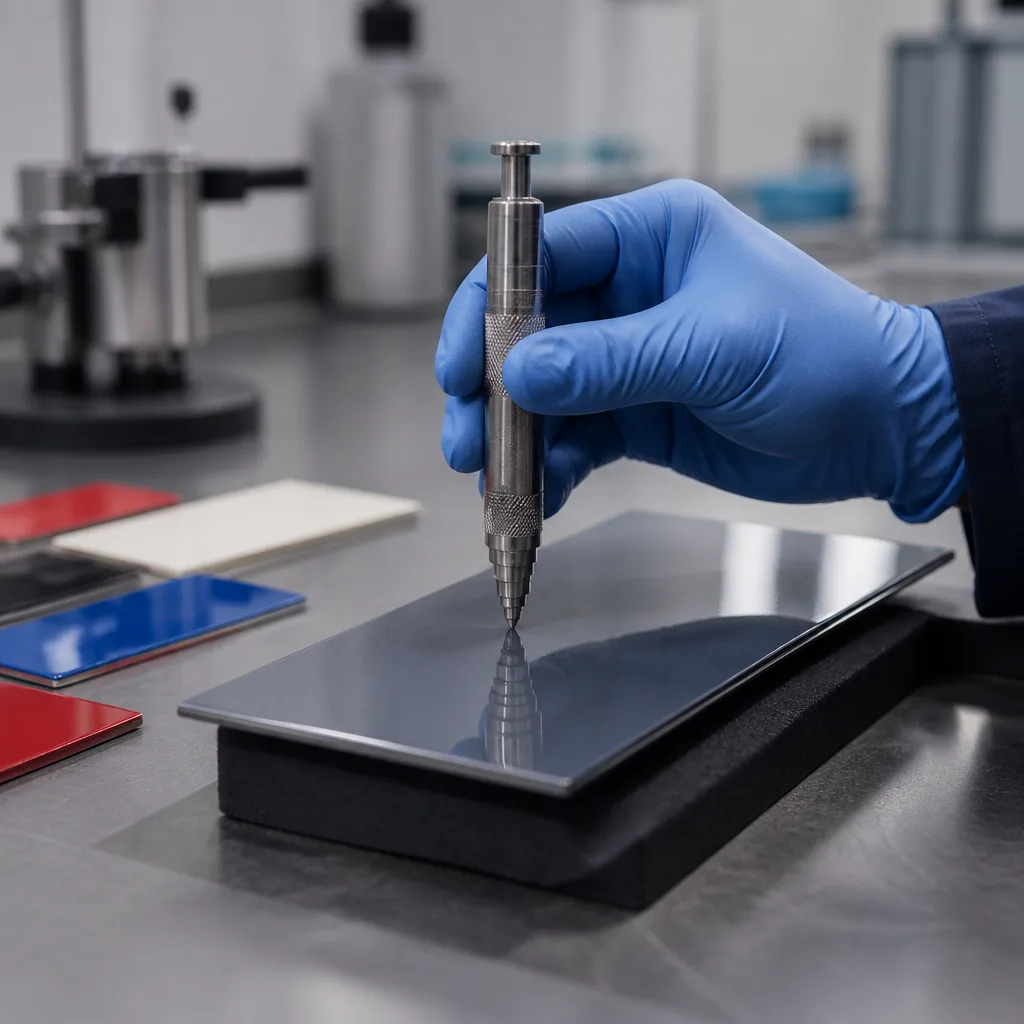
Although the GM 9507P standard has been designated as an inactive standard and largely replaced by newer GMW coating specifications, it remains an important historical reference as many laboratory procedures continue to be recognized and older vehicle programs may still refer to it.
The primary purpose of the GM 9507P standard is to determine whether a coating achieves sufficient hardness after curing. This standard helps engineers evaluate the following aspects:
The described test method is particularly valuable because it quickly shows whether a painted surface has reached the required hardness for use and service.
The nail hardness test is simple in principle. An examiner presses their fingernail against the coated surface using controlled force. The coating is then examined for permanent damage. Possible observations include:
A properly cured coating should resist permanent deformation. While testing may seem subjective, trained inspectors follow standardized procedures to ensure repeatability.
The GM 9507P standard is widely applied to painted and coated automotive parts, including those listed below:
Unlike many laboratory standards, the GM 9507P standard requires very little equipment. Typical equipment includes:
Since it functions as a nail-tip loading device, operator training is essential.
While individual General Motors standards include specific requirements, the general process follows these steps:
Some original equipment manufacturers may specify multiple locations for testing a component.
Coatings are evaluated based on the following characteristics:
A satisfactory result generally means the coating withstands the applied pressure without permanent damage.
Although developed for General Motors, similar nail hardness ratings are widely used in the automotive industry by:
Many accredited testing laboratories continue to list the GM 9507P standard among their current coating testing procedures.
The GM 9507P standard offers several practical advantages:
Despite its usefulness, the method has several limitations:
Therefore, the GM 9507P standard is often used in conjunction with other coating evaluations.
The GM 9507P standard is often associated with other older GM coating standards:
Together, these standards provide a comprehensive assessment of coating performance, including hardness, adhesion, chemical resistance, and corrosion resistance.
The GM 9507P standard has been used in the past in the following areas:
This testing method can quickly identify inadequately cured coatings before components progress further in the manufacturing process.
In short, the GM 9507P standard is considered an older General Motors standard. Modern GM programs generally refer to newer GMW specifications for coating evaluation. However, the concept of nail hardness remains widely used, and many accredited laboratories continue to offer tests conforming to the GM 9507P standard to support legacy components and customer requirements.
In conclusion, the GM 9507P standard has established a simple and effective method for evaluating the hardness and curing of automotive coatings through fingernail hardness testing. Despite its simplicity, it provides valuable information regarding a coating's resistance to indentation and handling damage.
For many years, our organization, with its competent and experienced staff, has been understanding the needs of its clients, providing the advanced testing services they require, and assisting them in the establishment, implementation, and improvement of management systems. Within this framework, we also provide testing services compliant with the GM 9507P standard.
To get an appointment, to get more detailed information or to request an evaluation, you can ask us to fill in our form and reach you.

