

Developed by General Motors Europe (GME), the “GME 60351 Determination of Moisture Content, Water Absorption and Thickness Swelling of Fiberboard, Particleboard, and Cardboard” standard is a material testing standard that includes procedures for determining the moisture content, water absorption, and thickness swelling of fiberboard, particleboard, cardboard, and similar cellulose-based materials. These materials are commonly used in automotive interiors, including door panels, luggage trays, luggage linings, seat back panels, and insulation components. This standard provides manufacturers with a consistent method for evaluating how these materials respond to moisture exposure.
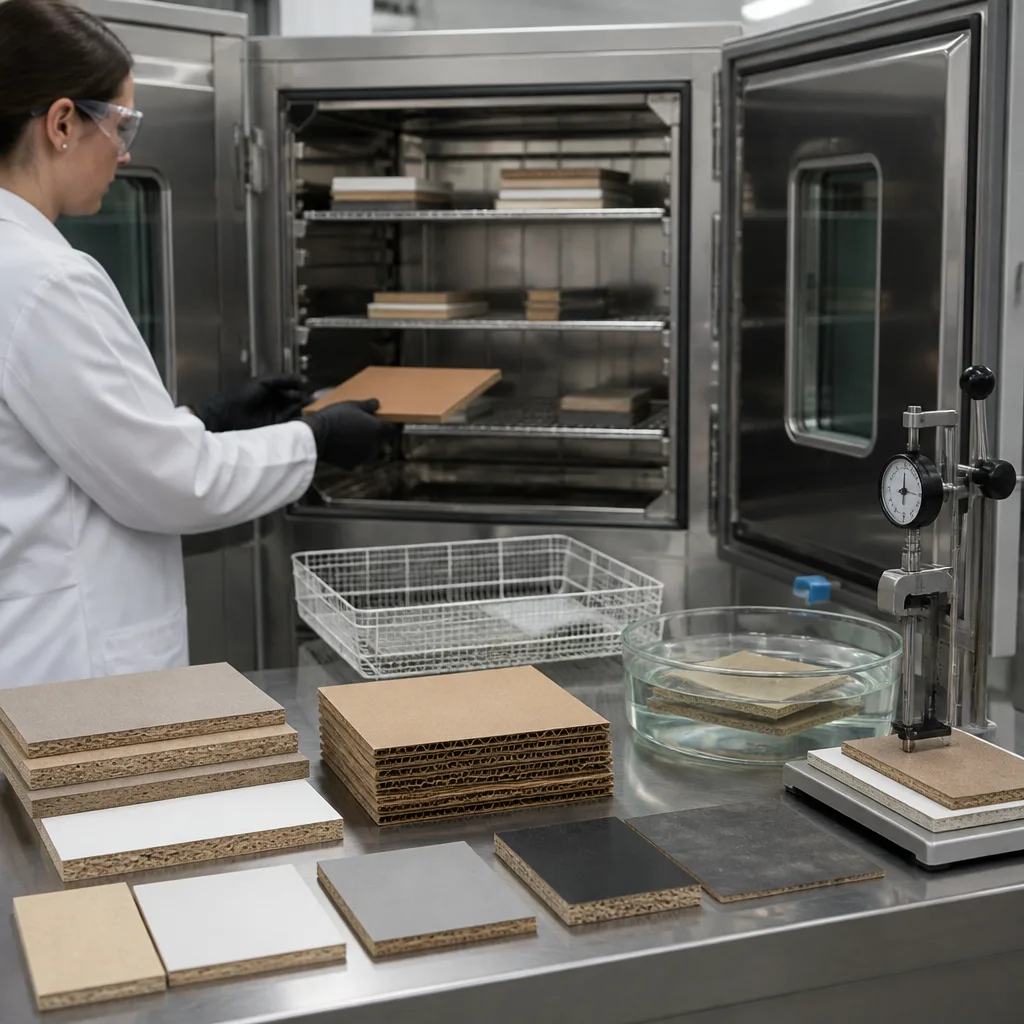
The primary purpose of the GME 60351 standard is to evaluate the dimensional stability and moisture resistance of sheet metal materials used in automotive applications. Since many interior components are exposed to varying humidity and occasional water contact during manufacturing, transportation, or vehicle servicing, understanding these properties is crucial for ensuring long-term durability. This standard helps engineers determine:
These measurements allow engineers to compare different materials and verify compliance with General Motors material specifications.
The GME 60351 standard primarily applies to the following:
Although developed for the automotive industry, the test principles can also be applied to materials used in furniture, packaging, and construction applications.
The key characteristics assessed by this standard are as follows:
Maintaining consistent moisture content is important for repeatable production processes.
Materials designed for humid environments should exhibit relatively low water absorption.
Thickness expansion is often one of the most critical acceptance criteria for automotive fiberboard materials.
The following steps are generally followed in the tests:
The GME 60351 standard is widely used in the automotive industry for evaluating materials used in the following areas:
These components must maintain their dimensions and structural integrity throughout the vehicle's lifespan.
Automotive engineers use the GME 60351 standard to compare candidate materials before production. This standard helps in:
This standard provides standardized measurements, allowing different suppliers to evaluate materials using the same methodology.
Implementing the GME 60351 standard offers several advantages:
The GME 60351 standard is one of several material testing methods developed by General Motors Europe that cover the physical performance of automotive interior materials. It is often used in conjunction with the following standards:
Together, these standards provide a comprehensive assessment of material suitability for automotive applications.
In conclusion, the GME 60351 standard includes a crucial test method for evaluating the moisture-related performance of fiberboard, particleboard, cardboard, and similar materials used in vehicle interiors. By measuring moisture content, water absorption, and thickness swelling under controlled conditions, this standard helps manufacturers select durable materials that maintain structural integrity and dimensional stability throughout the vehicle's lifespan. Its standardized approach promotes consistent quality, reliable supplier competence, and improved long-term performance of automotive interior components.
For many years, our organization, with its competent and experienced staff, has been understanding the needs of its clients, providing the advanced testing services they require, and assisting them in the establishment, implementation, and improvement of management systems. Within this framework, we also provide testing services compliant with the GME 60351 standard.
To get an appointment, to get more detailed information or to request an evaluation, you can ask us to fill in our form and reach you.

