

Due to increasingly stringent requirements regarding the cleaning and processing of components, rules must be established for all suppliers and those involved in the production process to ensure this cleanliness up to the point of assembly. The required cleanliness of components and associated load-bearing elements must be defined. This definition guarantees direct assembly without requiring additional cleaning before assembly.
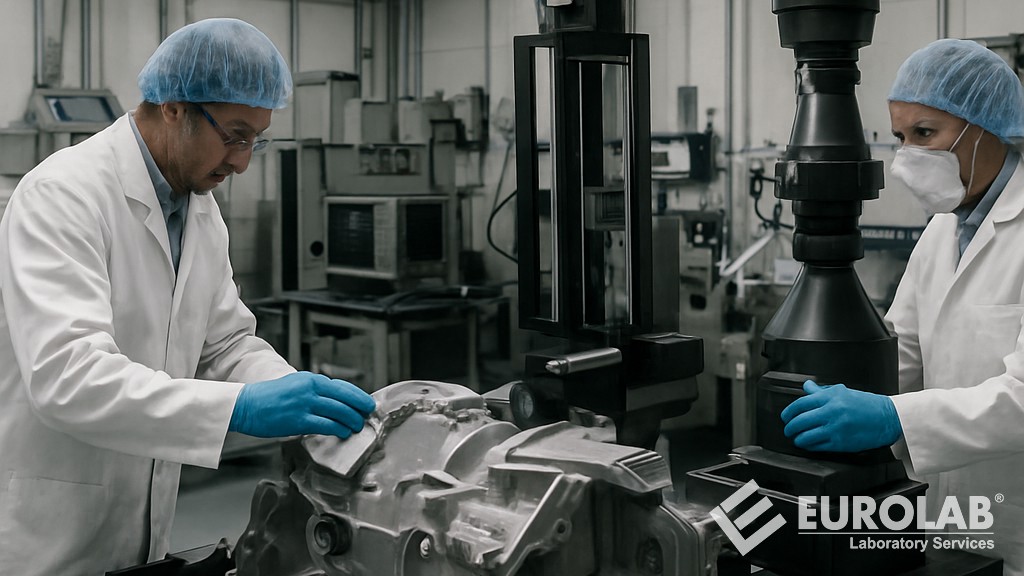
The “Porsche PN 132 Cleaning of components and load-bearing equipment - Definitions and test procedures” standard, designed by the Volkswagen automotive company, was developed for this purpose. This standard cannot replace the FTL14045 standard, which defines the testing of components with defined residual contamination.
The Porsche PN 132 standard describes the cleanliness of finished components, modules, and associated load-bearing elements. It applies to all newly developed components and must be implemented by development, procurement, order picking, process inspectors, and suppliers. The technical specifications or requirements of the component are reflected in series production qualification studies and process inspections. For example, components whose surfaces have not been cleaned due to corrosion protection (e.g., sheet metal parts in the body shell) are not covered by this standard. Classification of components according to their cleanliness levels must be carried out by Volkswagen teams and documented in the individual specification for each component.
To meet the varying cleaning requirements of different components, they must be assigned a cleaning level. The table provided within the standard serves as a guide for classification and also defines the requirements for each cleaning level. This classification must be documented in the relevant specifications.
Components must meet cleaning requirements at the following times:
The supplier's responsibility for fulfilling requirements and the verification method should be specified in the component specifications or requirements or action plans. Compliance with requirements in the production assembly group is subject to process controls.
The erasure test described in this standard is used to verify cleanliness. This erasure test is used for process assurance and is a tool for random sampling. If components do not achieve the required rating in the erasure test, corrective actions must be taken to resolve the issue. These corrective actions should be defined in action plans or internal audit documents.
Cleanliness levels are defined in the table as follows:
For all cleanliness levels:
In the high-risk world of automotive manufacturing, where precision is also a necessity, even the smallest speck of dust can lead to disaster. The Porsche PN 132 standard ensures that every component arriving on the assembly line is clean enough for immediate assembly. As electric vehicles and autonomous driving technology push the boundaries of engineering, standards like Porsche PN 132 have the power to keep contamination at bay.
Developed as part of a broader series of standards governing supplier interactions and quality controls, the Porsche PN 132 standard specifically addresses cleaning requirements for components and load carriers (such as transport pallets and packaging). This standard emerged in response to the industry's shift to just-in-time production, where parts must arrive ready for assembly, meaning no additional cleaning steps are required before assembly.
Unlike more general standards such as the ISO 16232 standard for particulate contamination, the Porsche PN 132 standard is tailored to Porsche's rigorous needs. This standard replaces or complements previous guidelines that focused on residual contamination testing for defined parts. The fundamental philosophy of the standard is to prevent contamination at its source to avoid costly recalls, production interruptions, or performance issues in vehicles.
The Porsche PN 132 standard essentially classifies parts according to their degree of cleanliness, ranging from SG1 (the strictest for critical components like fuel injectors) to SG4 (less demanding for non-sensitive parts). This tiered system allows for flexibility while maintaining rigor, ensuring that a transmission housing does not share the same level of cleanliness as an airbag sensor.
The Porsche PN 132 standard works in practice as follows:
These protocols shorten assembly time and reduce error rates by providing direct installation.
For many years, our organization, with its competent and experienced staff, has been understanding the needs of its customers, providing the advanced testing services they require, and assisting them in the establishment, implementation, and improvement of management systems. Within this framework, we also provide testing services to businesses in accordance with the "Porsche PN 132 Cleaning of components and load-bearing bodies - Definitions and test procedures" standard.
To get an appointment, to get more detailed information or to request an evaluation, you can ask us to fill in our form and reach you.

