

The standard “Suzuki SES D 2203 Painting code” developed by Suzuki, a Japanese automotive manufacturer, under Suzuki engineering standards, defines the painting code applied to the base metal, mainly for corrosion prevention and decoration purposes. However, it does not apply to the films shown below:
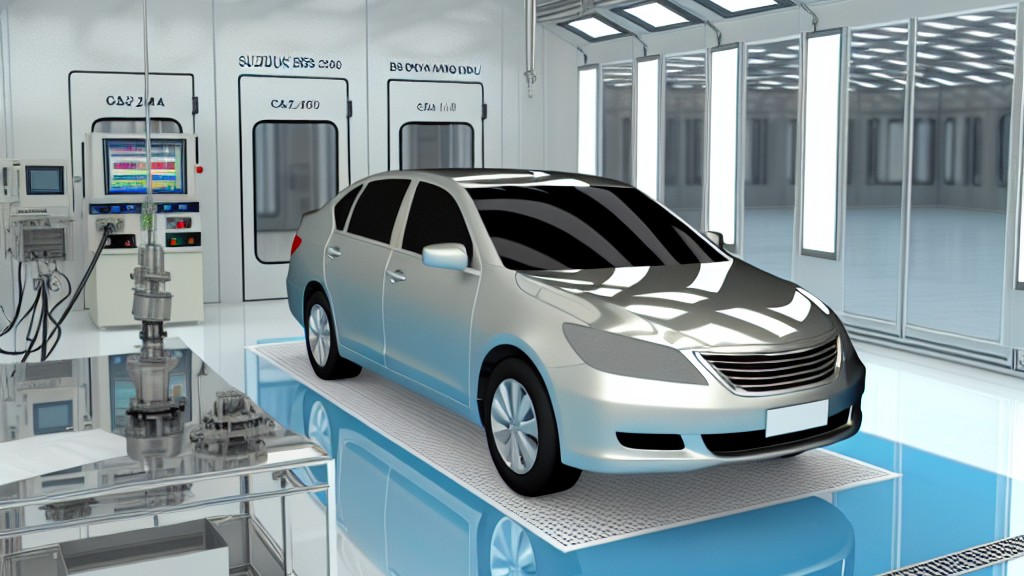
The appearance grade criteria defined in this standard are sometimes specified in other standards and drawings as a basis for finished surfaces, such as painting and coatings other than the base metal.
The physical properties of the paint film should comply with the table given in the standard, based on corrosion resistance.
The appearance grade should be in accordance with the table titled “Working conditions for air resistance tester using carbon arc lamp”, but for motorcycle and ATV, the appearance grade should be in accordance with the SES D 2223 standard.
In determining the paint, the combination of the paint film physical properties and the degree of appearance should be in accordance with the table titled “alkali resistance test conditions”.
The method of displaying paint in the official drawing or others should be as follows: picture, color code, paint film physical property and appearance grade. When the appearance grade and target surface are specified in the drawing, the method of displaying the appearance quality of the equipment part should comply with the SES D 2219 standard.
The paint film test method is carried out in a place with little air flow, not exposed to direct sunlight, and free from heat, gas, steam, dust, and other substances that may affect the test results. If the coated surface is contaminated, it shall be cleaned with a cloth (moistened with gasoline) to remove any adhering oil. The materials, instruments, and reagents used for the test shall be in accordance with Japanese industrial standards. The parts used for the test shall be taken from finished products manufactured according to the given painting specifications (base metal conditioning, pretreatment, painting process, coating thickness). If they cannot be correctly placed in the test device due to their size, shape, or mass, they shall be cut to a suitable size before use. Any exposed base metal (for example, in the cutting section, around the effective surface, or on the back) that may affect the test results shall be masked with a cover that shall remain unchanged under the test conditions by mutual agreement between the parties concerned. If samples are used by mutual agreement between the supplier and the purchaser, they shall be manufactured using the same materials and paints used for the parts. After drying and curing, the parts used for testing should be left for the time specified in the table titled “Separation time according to paint type and application method” before testing. The table shows the minimum separation times at a temperature of 20 degrees plus/minus 2 degrees and a humidity of 65 percent plus/minus 5 percent, as a rule of thumb.
In the appearance test, the background color should be achromatic (approximately N8721 gray specified in the JIS Z 5 standard). Any light other than fluorescent or scattered daylight emitted from the frosted glass plate is used to provide a uniform illumination of approximately 300 lx when measured on the effective surface. Visually inspect the color and brightness of the sample and whether there are scars, pits, sanding marks, particles and bubbles from a distance of approximately 50 cm (or 30 cm for SS grade, orange peel, roughness sanding marks). If necessary, border samples are prepared by mutual agreement between the supplier and the purchaser.
This standard describes the following test methods used in paint film examination:
This standard also describes the following test methods:
Our organization, which has been trying to support businesses from every sector with its testing, measurement, analysis and evaluation studies carried out in a wide range for years, has a strong staff that closely follows the developments in the world in the field of science and technology and constantly improves itself. In this context, testing services in accordance with the "Suzuki SES D 2203 Painting Code" standard are also provided to businesses.
To get an appointment, to get more detailed information or to request an evaluation, you can ask us to fill in our form and reach you.

