

The Volvo STD 423-0037 Color fastness to friction - Rubber, plastics, textiles, paints and varnishes standard, developed by Volvo, defines two separate test methods: Method A for painted or varnished surfaces, and Method B for bulk colored plastics, textiles, rubber, and similar materials. In both methods, the test piece is rubbed against a reference textile (friction material) piece (Method A, wool or Method B, cotton) with a specific number of back-and-forth movements under a certain pressure. The aim is to determine the behavior of the rubbed material in terms of staining and color change of the tested material. The friction material can be dry or immersed in different liquids.
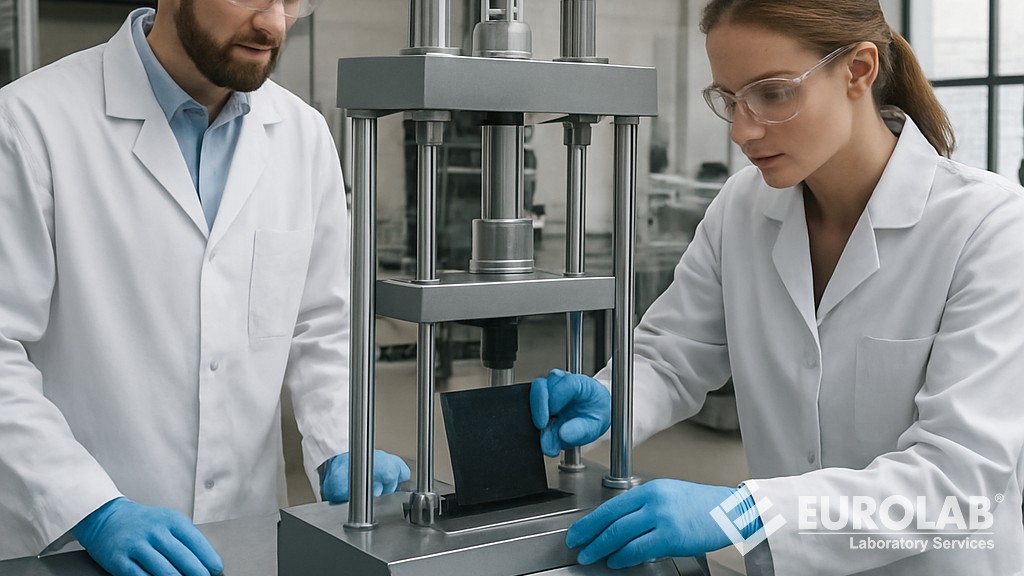
The test equipment used for the test must be designed to allow for reciprocating linear friction motion. It must be possible to apply the correct loads and use the friction materials specified for methods A and B.
When applying “Method A - Paints and varnishes”, a conditioned test piece (painted surface) is placed in the device. Unless otherwise specified, the load is set to 1000 plus/minus 10 g. A specific number of cycles are performed as needed, usually 5, 10, 20 or 30 cycles. The passage length (40 plus/minus 10 mm) should be measured between the outer edges of the felt pieces, at the leftmost and rightmost end positions. Unless otherwise specified, three tests should be performed. Each test should be performed on the test piece (or on a new test piece) in a new position and after the felt has been replaced with a new piece.
During evaluation, the test piece is released, and the rubbing area on the test piece and the felt pieces is evaluated according to the requirements for discoloration and staining. If necessary, the test piece is cleaned with a non-destructive liquid before evaluation. The wetted felt pieces should be dried at room temperature for 2 hours before evaluation. Evaluation should be performed after the test piece and the rubbing material are completely dry. Discoloration of the test piece and staining of the rubbing material with gray tones are evaluated according to STD 1026,8201 (ISO 105-A02) for test pieces and STD 1026,8202 (ISO 105-A03) for rubbing material. Other visible changes on the surface of the test piece, such as loss of gloss or surface deterioration (scratches), are checked.
When applying “Method B - Rubber, plastics and textiles”, each test piece is secured to the base plate of the testing device by means of clamps so that its longitudinal direction follows the device's track. To reduce movement of the test piece, double-sided tape, wire mesh, or soft-backed waterproof sandpaper is placed between the base plate of the testing device and the test piece. When testing multicolored textiles, care should be taken to position the test piece so that all colors of the pattern are rubbed during testing. Alternatively, if the color areas are sufficiently large, more test pieces can be taken and each color can be evaluated separately. If the color areas are small and adjacent, it is recommended to use a rotary device as described in ISO 105-X16 standard.
The test piece is placed on the base plate of the device with its longitudinal orientation parallel to the push and pull direction of the sliding plate. The friction finger should apply a downward force of 9 plus/minus 0,2 N by moving back and forth in a straight line along a rail of 104 plus/minus 3 mm. The pin is covered with friction cotton fabric. The sliding plate is then pushed 10 times at a speed of approximately 100 mm/s (100 mm in each direction, i.e., a total of 2000 mm) so that the textile-covered pin rubs against the test piece with a force of 9 N. Textile test pieces are tested in both warp and weft directions. The test and the operation of the device should be regularly verified and the results kept in a log. An in-house or on-site friction sample should be used and three dry tests should be performed.
During evaluation, the friction cotton fabric should first be air-dried at room temperature. Changes in the color of the test piece and the staining of the friction material with gray tones are evaluated according to STD 1026,8201 (ISO 105-A02) for test pieces and STD 1026,8202 (ISO 105-A03) for friction material. Other visible changes on the surface of the test piece are noted.
In the high-risk world of automotive manufacturing, where vehicles are exposed to harsh conditions ranging from scorching sunlight to daily wear and tear, material durability is paramount. Volvo, the Swedish automotive giant known for its commitment to safety and innovation, has long set the bar high with its rigorous corporate standards. Among these is the Volvo STD 423-0037 standard, a key test protocol designed to assess the colorfastness of interior materials to friction. This standard ensures that fabrics, leathers, and other surfaces in Volvo vehicles maintain their aesthetic appeal and structural integrity over time, preventing issues such as fading or discoloration that could compromise both luxury and safety.
Color fastness refers to a material's ability to retain its original color and appearance when exposed to external factors such as friction, light, or chemicals. In vehicle interiors, where passengers interact daily with seats, instrument panels, and door panels, friction from clothing, hands, and even cleaning agents can rapidly degrade surfaces if not properly tested.
The Volvo STD 423-0037 standard addresses this problem directly by simulating real-world wear and tear. Poor color fastness can lead to:
By making compliance with this standard mandatory, Volvo ensures that interior components meet stringent performance criteria that align with broader industry regulations such as the International Organization for Standardization (ISO) and the Society of Automotive Engineers (SAE).
For many years, our organization, with its competent and experienced staff, has been understanding the needs of its customers, providing the advanced testing services they require, and assisting in the establishment, implementation, and improvement of management systems. Within this framework, we also provide testing services to businesses in accordance with the "Volvo STD 423-0037 Color fastness to friction - Rubber, plastics, textiles, paints and varnishes" standard.
To get an appointment, to get more detailed information or to request an evaluation, you can ask us to fill in our form and reach you.

