Ford FLTM BO 113-03 Load Deformation Test
The “Ford FLTM BO 113-03 Load Deformation Test” standard, developed by Ford Motor Company (Ford), describes a test method used to determine the load deformation properties and load loss behavior of polyurethane foam materials used in automotive interior components such as armrests, crash pads, consoles, and other padded upholstery.
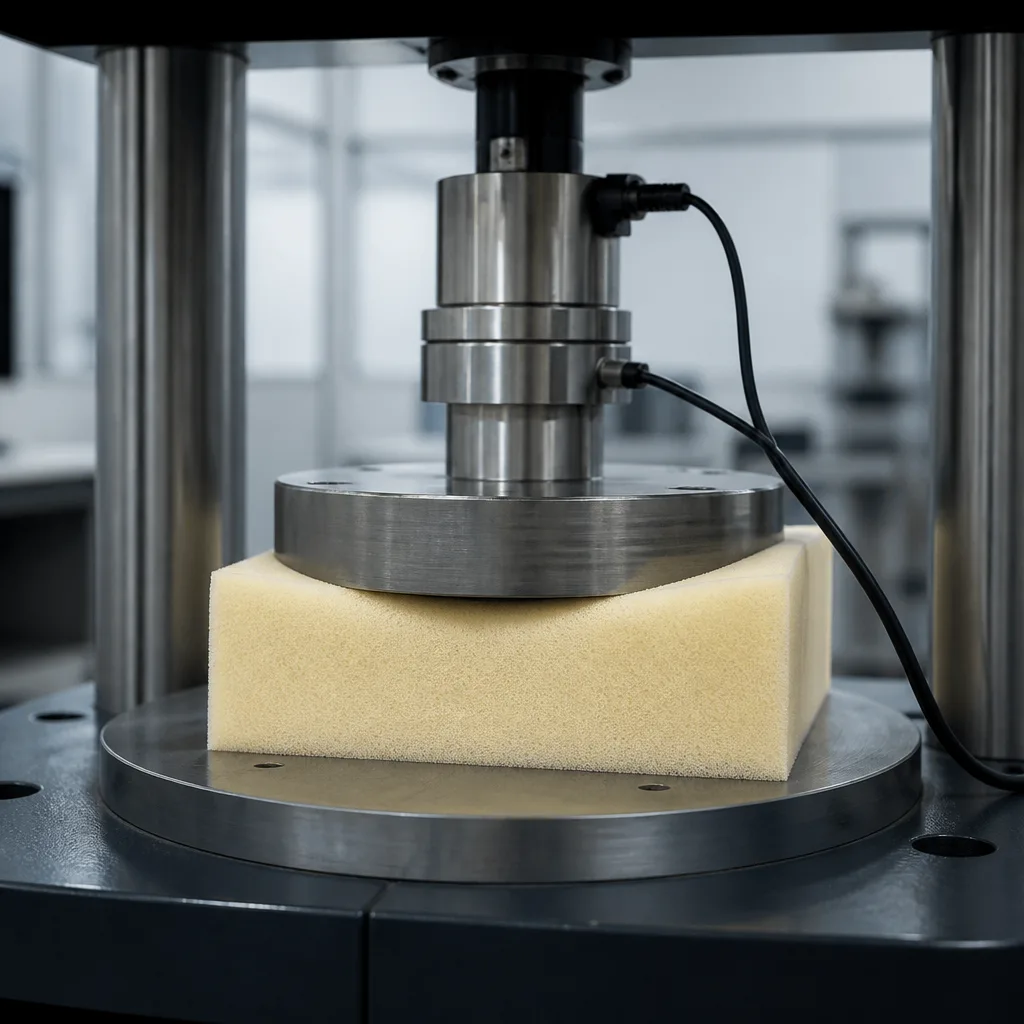
The primary purpose of this standard is to evaluate how foam materials react when subjected to compressive forces. The test measures the following:
- The force required to compress the foam to the specified deformations.
- The foam's resistance to deformation.
- Permanent loss of support after compression.
- Consistency of cushioning performance.
These measurements help engineers determine whether a foam material can provide the desired comfort, support, and durability for automotive applications.
The Ford FLTM BO 113-03 standard is commonly used in the following areas:
- Dashboard shock absorber pads
- Door handles
- Center console pads
- Main supports
- Interior upholstery cushioning systems
- Polyurethane foam components
This method is particularly important for materials that need to maintain their shape and support properties throughout the lifespan of a vehicle.
In principle, in a load-deformation test, a foam specimen is compressed under controlled laboratory conditions. The force required to reach specific deformation levels is recorded. The specimen can then be allowed to return to its original state, and measurements are repeated to determine any loss in load-carrying capacity. Typical assessments include:
- Initial thickness measurement.
- Controlled compression up to a specific thickness percentage.
- Recording the compression load values.
- Recovery time.
- Re-measurement of load-deflection characteristics.
- Calculating load loss or performance degradation.
This standard generally evaluates the following:
- Load deflection: Foam stiffness and support level.
- Compression strength: The ability to withstand applied loads.
- Load reduction: Maintaining cushioning performance.
- Recovery features: Ability to return to its original shape.
- Durability: Long-term service performance.
Vehicle occupants interact with cushioned interior components every day. If foam materials lose their firmness or collapse over time, customer comfort and perceived quality decrease. This standard helps to ensure the following:
- The armrests remain supportive.
- The impact pads retain their energy-absorbing properties.
- The internal components retain their original feel.
- Material quality remains consistent across production batches.
- Long-term durability requirements are met.
The Ford FLTM BO 113-03 standard is frequently used in conjunction with related Ford foam performance standards, including:
- Ford FLTM BO 111-02 Pothole and Recovery Test
- Ford FLTM BO 113-04 Rolling Ball Fatigue Test
- Ford FLTM BO 012-01 Polyurethane foam resistance to degradation.
- Ford FLTM BN 115-07 Compression permanent deformation of polyurethane foam.
The Ford FLTM BO 113-03 standard is required because it ensures that polyurethane foam components used in vehicle interiors provide the right balance between comfort, support, durability, and safety throughout the vehicle's lifespan. This standard is considered important for the following reasons:
- Provides consistent passenger comfort: Automotive foam is used in armrests, console pads, knee supports, headrests, and other interior components that passengers regularly touch. If the foam is too soft, it may not be supportive; if it is too firm, it may reduce comfort. This standard measures load-deflection characteristics to ensure each component provides the intended feel and support.
- It confirms material quality: Foam properties can change for the following reasons:
- Differences in raw materials
- Production conditions
- Differences in foam density
- Supplier process changes
This standard provides a repeatable method for comparing materials and verifying that production batches meet Ford's requirements.
- Prevents premature foam collapse: During vehicle use, the interior foam is repeatedly compressed. Over time, some materials lose their load-bearing capacity and become permanently compressed. The test identifies materials that are likely to suffer from the following problems:
- Excessive softening
- Permanent deformation
- Reduced support performance
This helps prevent warranty issues and customer complaints.
- Supporting vehicle durability requirements: Modern vehicles are expected to maintain their appearance and comfort for many years. Load-deformation testing helps engineers predict how foam materials will perform after prolonged use and whether they can withstand repeated loading without significant deterioration.
- Contributes to passenger protection: Some foam components, such as dashboard pads and knee supports, play a role in absorbing impact energy during collisions. For the foam to perform as designed, it needs to maintain certain stiffness properties. Load-deformation testing helps verify that these materials retain their energy management capabilities.
- It enables material comparison and selection: Tool programs typically evaluate multiple foam suppliers and formulations. This standard provides objective data that allows engineers to:
- Comparing materials fairly.
- Choosing the best performing foam
- Optimizing comfort and durability goals.
- Controlling costs while maintaining performance.
- Improves customer perception of quality: Customers often evaluate vehicle quality based on how the interior surfaces feel. Foam that is soft, uneven, or permanently compressed can create a perception of poor workmanship. Ford helps maintain a high-quality interior feel throughout the vehicle's lifespan by providing consistent load-deformation performance.
- Supports supplier verification: This standard provides a common testing method that Ford and its suppliers can use for the following purposes:
- Verification of new materials.
- Approval of production changes
- Ongoing quality monitoring
- Resolving performance disputes using objective data.
In short, this standard is important because it verifies that polyurethane foam materials maintain their stiffness, support, recovery, durability, and safety performance over time.
In conclusion, the Ford FLTM BO 113-03 standard is a critical material performance standard for evaluating the compression behavior of polyurethane foam used in automotive interiors. By measuring load-deformation properties and load-holding capacity, the method helps manufacturers ensure passenger comfort, product durability, and consistent quality throughout the vehicle's lifespan. This standard remains a vital tool in the qualification and validation of foam materials for Ford vehicle programs.
For many years, our organization, with its competent and experienced staff, has been understanding the needs of its customers, providing the advanced testing services they require, and assisting them in the establishment, implementation, and improvement of management systems. Within this framework, we also provide testing services to businesses in accordance with the Ford FLTM BO 113-03 standard.



