

The “GMW 3154 Mandrel Bending Test” standard, developed by General Motors Worldwide (GMW), includes a test procedure used to evaluate the cold-temperature flexibility and crack resistance of sealing compounds and adhesives. This standard is particularly important for automotive materials such as seam sealants, flange sealants, underbody sealants, and filler adhesives.
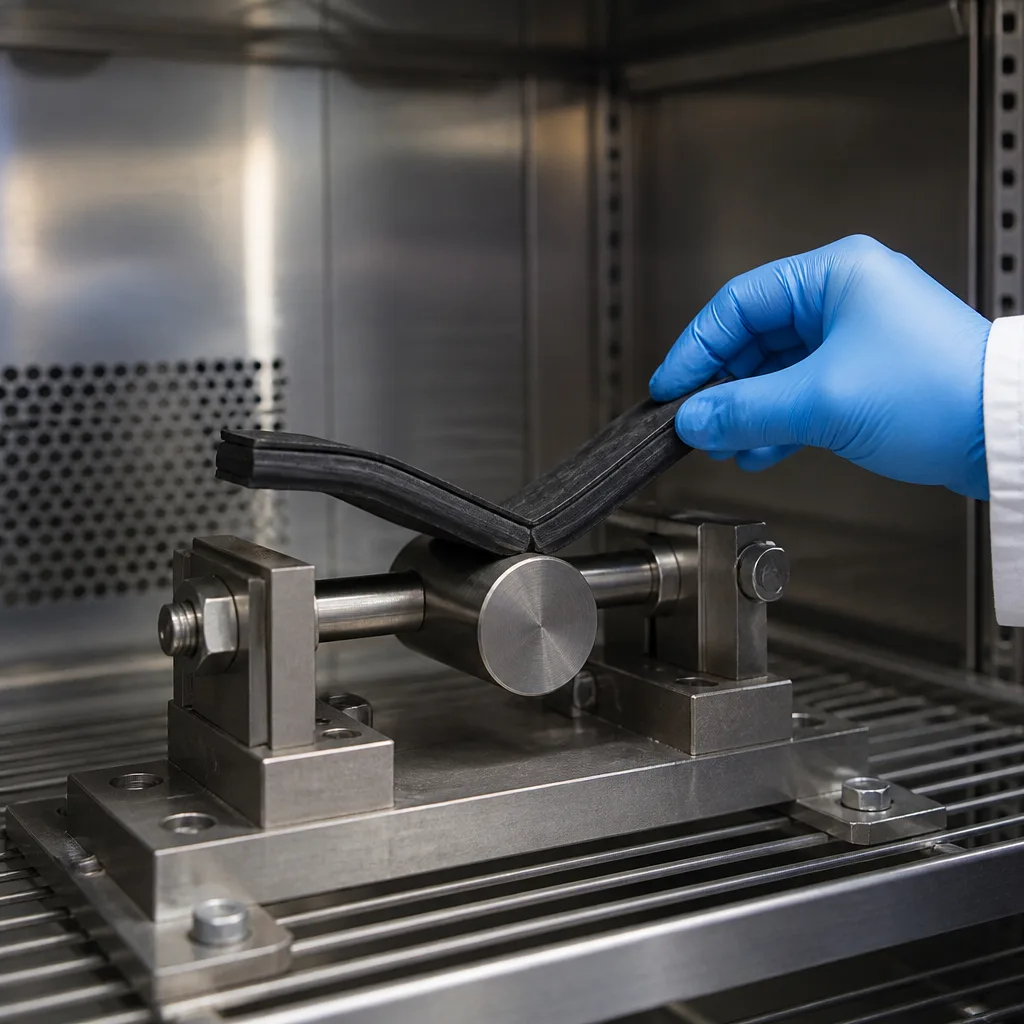
The described test method is designed to determine if a material remains sufficiently flexible when exposed to low temperatures and then subjected to bending around a mandrel. This is important because automotive sealants can harden or become brittle in cold environments, potentially leading to cracks, loss of adhesion, or reduced sealing performance.
The primary purpose of the GMW 3154 standard is to define the cold resistance of sealants and adhesives. This standard specifically covers the following materials:
This standard distinguishes these materials from flexible carpets and similar materials. For bending carpets or other flexible materials at cold temperatures, the GMW 3154 standard refers instead to the GMW 14108 standard. In practical terms, this method answers the question: can the material withstand bending at low temperatures without cracking or other unacceptable damage?
The basic principle of the mandrel bending test is relatively simple. A prepared sample of the material is conditioned at a specified low temperature and then bent around a mandrel. The mandrel provides a controlled bending radius. When the sample is rotated forcefully around the mandrel, tensile and compressive deformations occur within the material. A material with good low-temperature flexibility should accommodate this deformation without cracking. A material that becomes brittle at low temperatures may exhibit the following:
Therefore, this procedure is a useful way to translate a material's low-temperature flexibility into a practical automotive performance assessment.
The GMW 3154 standard is also described by testing laboratories as the conical mandrel bending test, and commercial material data sheets often refer to it as the cold flexibility test.
The exact dimensions of the sample, conditioning temperature, mandrel configuration, bending speed, and acceptance requirements are specified in the GMW 3154 standard. Generally, the testing process follows these steps:
The GMW 3154 standard is primarily concerned with low-temperature flexibility rather than tensile strength, peel strength, or adhesion strength. The key property evaluated is the material's ability to resist deformation when cold:
These features make the GMW 3154 standard a complement to, rather than a replacement for, other automotive material testing standards.
The GMW 3154 standard is particularly important for sealants and adhesives used in vehicles. Potential applications include:
The importance extends to materials that must maintain their flexibility during vehicle operation in cold climates. For example, a sealant applied to a body joint may be subjected to significant temperature variations throughout its service life. If the sealant becomes excessively brittle at low temperatures, the movement of adjacent components can cause cracks. Once cracks form, water, moisture, contaminants, or corrosion-promoting substances can penetrate the joint.
GMW 3154 standard is considered important for the following reasons:
Interpreting the results:
However, this should not be interpreted as a general statement that the material is suitable for every automotive application. The GMW 3154 standard evaluates a specific aspect of performance: cold-temperature bending resistance.
A material may pass a mandrel bending test but show deficiencies in other properties:
The relationship between GMW 3154 and GMW 14108 is significant. GMW 3154 addresses the cold resistance of sealants and adhesives in particular, while it refers to GMW 14108 for low-temperature bending of carpets and other flexible materials.
The GMW 3154 standard is used not only by automotive manufacturers but also by material suppliers and independent laboratories that perform original equipment manufacturer (OEM) qualification testing.
The main advantages of the described test method are as follows:
For many years, our organization, with its competent and experienced staff, has been understanding the needs of its clients, providing the advanced testing services they require, and assisting them in the establishment, implementation, and improvement of management systems. Within this framework, we also provide testing services in accordance with the GMW 3154 standard.
To get an appointment, to get more detailed information or to request an evaluation, you can ask us to fill in our form and reach you.

